
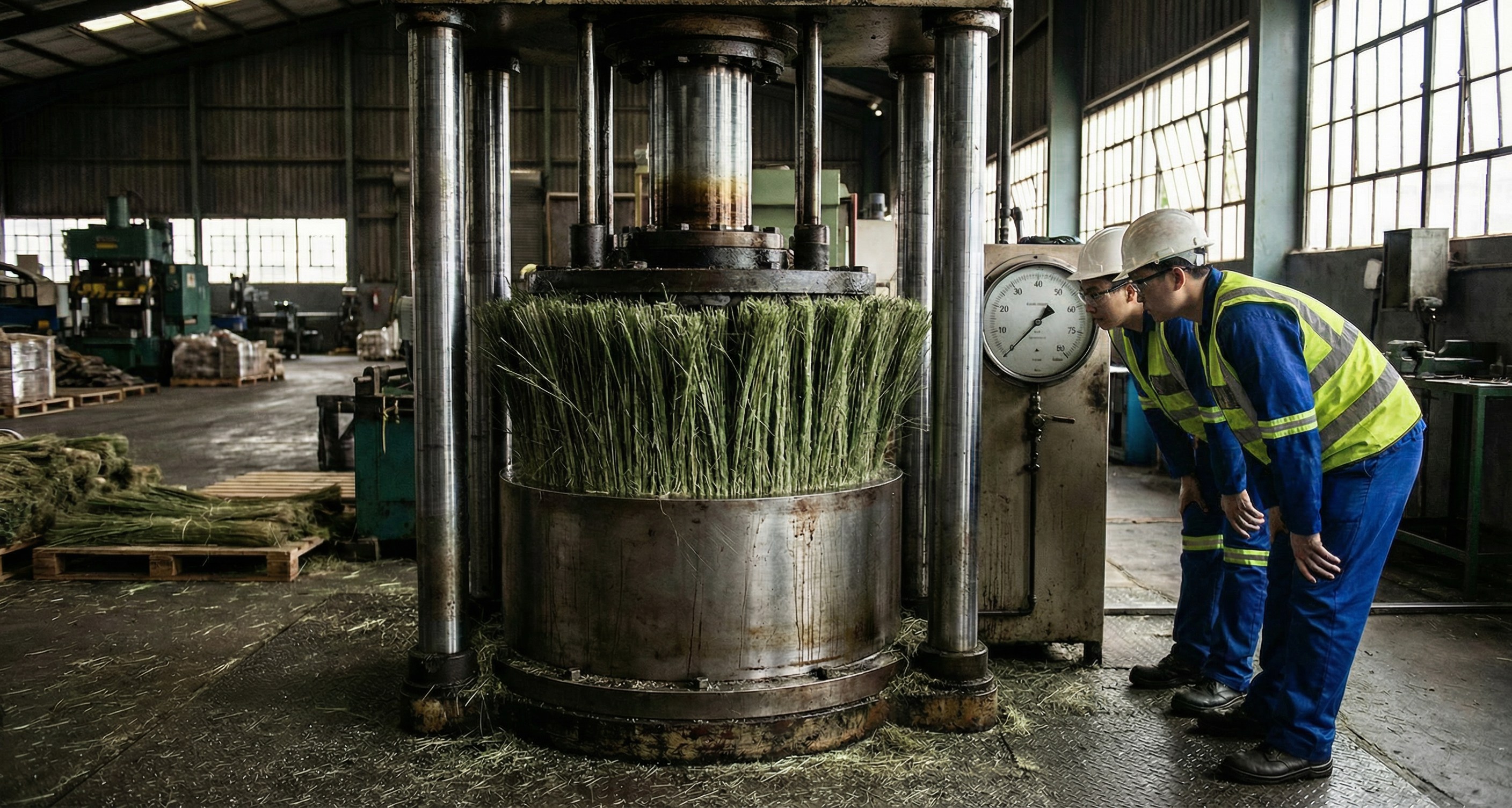
1. Raw Material Selection: Why Sisal Quality Determines Everything
The foundation of a tournament-grade dartboard is high-density African sisal fiber.
However, not all sisal fibers are equal. Professional manufacturers control:
-
Fiber length consistency
-
Fiber diameter distribution
-
Moisture content before compression
-
Fiber cleanliness (removal of dust and broken strands)
Why This Matters
If fiber length varies too much:
-
Compression becomes uneven
-
Surface hardness becomes inconsistent
-
Bounce-out rates increase
Moisture variation above acceptable levels leads to:
-
Post-production expansion
-
Warping during transport
-
Reduced lifespan under dry indoor environments
High-grade manufacturers typically dry and stabilize fibers before compression to ensure long-term structural stability.
2. Compression Engineering: Density Is Not Just “High or Low”
Most buyers ask: “Is it high density?”
But the real question should be:
Is the density uniform across the entire 360° board?
Professional Compression Control Includes:
-
Multi-stage hydraulic compression
-
Controlled pressure calibration
-
Core vs outer ring density balance
-
Thickness tolerance control (usually within ±1mm)
If compression is uneven:
-
The bull area becomes harder than outer segments
-
Certain scoring zones wear faster
-
Players feel inconsistent dart penetration
Tournament-grade boards require density uniformity across all segments—not just overall firmness.
3. Segment Geometry Accuracy and Scoring Precision
In competitive play, millimeter-level deviations matter.
Professional dartboard manufacturers use:
-
CNC-guided cutting systems
-
Fixed template alignment frames
-
Precision depth cutting for segment boundaries
Key Measurements Controlled:
-
Triple and double ring width
-
Bull and outer bull diameter
-
Segment angle precision
-
Surface flatness deviation
If geometry drifts even slightly:
-
Certain scoring zones become statistically easier
-
Competitive fairness is compromised
-
Professional players immediately notice
Consistency in geometry is one of the defining characteristics of tournament-level boards.

4. Blade Wiring System: Bounce-Out Reduction Engineering
Traditional round wires cause more bounce-outs.
Tournament boards use thin blade wiring systems.
Professional blade wiring design includes:
-
Razor-thin edge profile
-
60° or optimized angle placement
-
Secure embed depth into compressed sisal
-
Reinforced junction points at bull and triple rings
Poor wiring installation causes:
-
Wire lifting after repeated hits
-
Segment separation
-
Increased bounce-outs over time
Tournament-grade boards are engineered to keep wiring stable even after thousands of impacts.
5. Surface Recovery & Self-Healing Performance
One of the most important characteristics of a competition board is self-healing behavior.
After a dart is removed:
-
Fibers should close naturally
-
Surface should remain smooth
-
Holes should not widen excessively
Manufacturers test this by:
-
Repeated impact at identical coordinates
-
Simulated league play cycles
-
Monitoring surface deformation over time
Boards that cannot recover properly develop soft zones and uneven scoring surfaces.
6. Durability Testing Protocols Used by Professional Manufacturers
A tournament-grade dartboard must pass structured durability testing.
Common Testing Procedures Include:
-
Impact Cycle Testing
-
Simulated 10,000–20,000 dart impacts
-
Focused on triple 20 region
-
-
Segment Wear Mapping
-
Visual and density comparison after stress testing
-
-
Wire Stability Testing
-
Force testing to ensure wires remain embedded
-
-
Moisture Stability Testing
-
Simulated high-humidity exposure
-
Post-drying structural measurement
-
-
Rotation Performance Testing
-
Ensuring even wear distribution when rotated
-
Only boards passing all tests are labeled tournament-grade.
7. Why Tournament Boards Cost More
The higher price is due to:
-
Higher grade sisal material
-
Slower, controlled compression cycles
-
Precision cutting systems
-
More labor-intensive inspection
-
Rejection of boards that fail tolerance limits
Lower-cost boards often skip one or more of these steps.
8. What Buyers Should Evaluate When Selecting a Tournament-Grade Dartboard Supplier
For brands, distributors, or event organizers, ask:
-
How is density uniformity measured?
-
What compression pressure standards are used?
-
Are segment templates fixed or manual?
-
What testing cycles are performed before approval?
-
Can the manufacturer provide repeatability data?
Real manufacturers answer clearly. Traders avoid specifics.
Conclusion
A tournament-grade dartboard is a precision sports instrument.
It requires:
-
Controlled fiber sourcing
-
Engineered compression
-
Precise geometry
-
Advanced wiring systems
-
Structured durability testing
When manufacturing discipline meets material quality, competition-level performance becomes repeatable—not accidental.
FAQs
1. What makes a dartboard officially tournament-grade?
Uniform density, precise segment geometry, blade wiring systems, and structured durability testing—not just branding.
2. Does higher density always mean better performance?
Not necessarily. Uniform density is more important than simply high density.
3. How long should a tournament-grade dartboard last?
Under heavy league play, several months of intensive use. Under moderate club play, 1–2 years with proper rotation.
4. Are all blade wire dartboards suitable for tournaments?
No. Wire design must also include stable embed depth and correct angle alignment.
5. Can tournament boards be customized for private labels?
Yes. Branding and color customization can be added without compromising structural standards—if manufacturing tolerances remain unchanged.

