
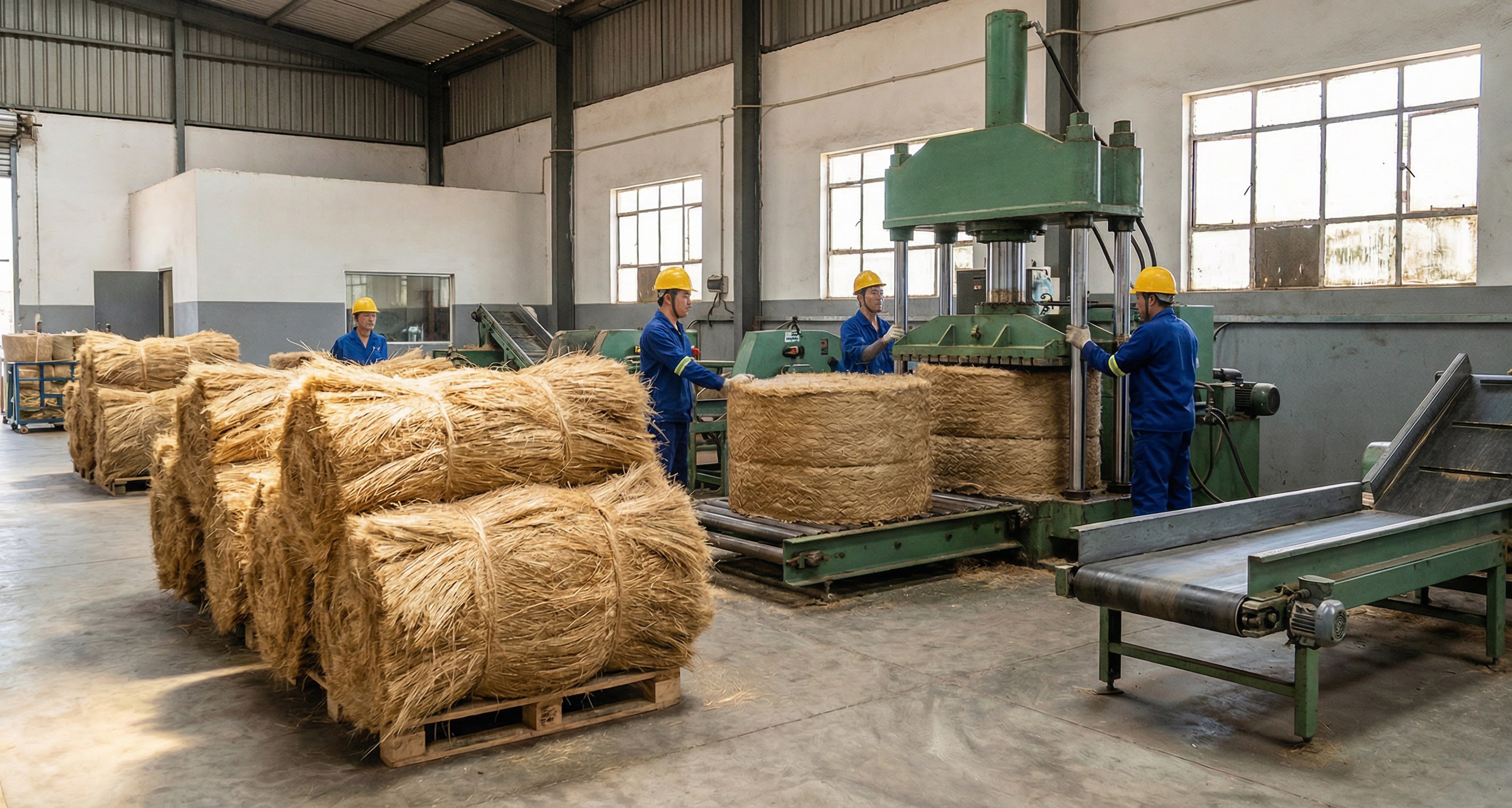
 1. Raw Material Selection: High-Density Sisal Fiber
The foundation of every professional dartboard is sisal fiber, a natural fiber derived from the agave plant. Sisal is widely used because it has excellent elasticity and self-repairing properties.
High-quality dartboard manufacturers carefully select Grade A sisal fibers with the following characteristics:
-
Long fiber length for better compression strength
-
Uniform color and texture
-
High density to improve durability
-
Strong natural elasticity for self-healing after dart removal
Premium dartboards often use African or Kenyan sisal, which is known for producing dense and long fibers that perform well under repeated impacts.
The raw fibers are cleaned, sorted, and processed before entering the compression stage.
2. Fiber Preparation and Compression
After raw materials are selected, the sisal fibers are processed into tightly packed bundles.
The steps include:
-
Fiber cleaning – removing dust and impurities
-
Moisture adjustment – ensuring optimal humidity levels
-
Fiber alignment – arranging fibers vertically for consistent structure
-
Hydraulic compression – compressing fibers into dense cylindrical blocks
Industrial hydraulic presses apply extreme pressure (often several hundred tons) to compress the fibers into solid forms.
This process determines:
-
Dartboard density
-
Self-healing capability
-
Long-term durability
The compressed sisal cylinders are then cut into board-sized sections.
3. Precision Cutting and Shaping
The compressed sisal blocks are cut into the standard dartboard diameter:
17.75 inches (451 mm) — the official tournament size.
Precision cutting machines ensure:
-
Perfect round shape
-
Uniform thickness
-
Balanced fiber density
After shaping, the surface is smoothed and prepared for printing and wire installation.
Any boards with uneven density or surface defects are removed during this stage.
4. Spider Wire Installation
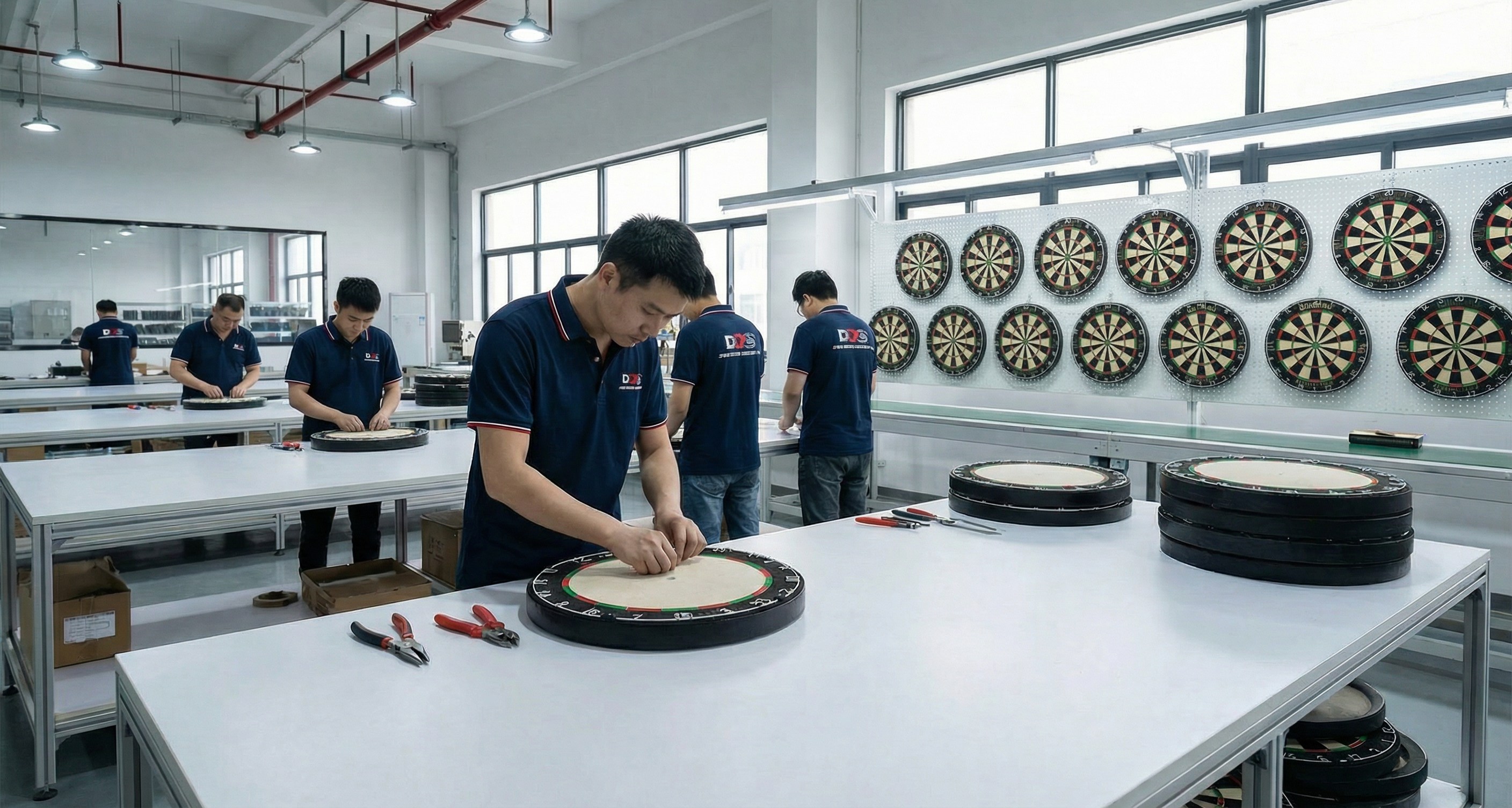
One of the most important parts of dartboard manufacturing is the installation of the spider wire, the metal wire system that separates scoring segments.
High-end dartboards use thin blade wires instead of traditional round wires.
Advantages of blade wires include:
-
Reduced bounce-outs
-
Clearer scoring zones
-
Improved durability
The spider is precisely aligned and pressed into the board surface using specialized equipment to ensure that all 20 scoring segments are perfectly positioned.
Accuracy is critical here because even a small deviation can affect scoring.
5. Number Ring Assembly
The number ring is the outer ring that indicates the scoring numbers from 1 to 20.
Professional dartboards usually feature:
-
Rotatable number rings
-
Anti-rust steel construction
-
Clear printed numbers
A rotatable number ring allows players to rotate the board periodically so that frequently hit sections (such as the 20 segment) wear evenly, significantly extending the board’s lifespan.
6. Surface Printing and Finishing
After the structural components are assembled, the board surface is printed with official dartboard colors and segment markings.
Standard dartboard color scheme includes:
-
Black segments
-
White segments
-
Red double/bull segments
-
Green double/bull segments
Factories use high-precision silk-screen printing to ensure color accuracy and sharp lines.
A protective treatment may also be applied to improve moisture resistance and maintain long-term color clarity.
7. Quality Inspection
Before packaging, every dartboard goes through multiple quality checks, including:
-
Density testing
-
Surface flatness inspection
-
Wire alignment accuracy
-
Color consistency
-
Bounce-out testing
Some manufacturers also perform random dart impact tests to simulate real gameplay conditions.
Only boards that pass all inspections are approved for export or distribution.
8. Packaging and Shipping
Professional dartboards are carefully packaged to prevent deformation during transportation.
Common packaging includes:
-
Protective foam layers
-
Strong cardboard cartons
-
Moisture-resistant wrapping
For bulk buyers, factories often provide OEM packaging, custom branding, and retail-ready boxes.
Proper packaging ensures that the dartboards arrive in perfect condition for retailers, distributors, and sports venues.
Why Manufacturing Quality Matters
The difference between a low-quality dartboard and a professional one often lies in the manufacturing process.
A well-manufactured dartboard offers:
-
Longer lifespan
-
Fewer bounce-outs
-
Better self-healing surface
-
Consistent scoring performance
For dart brands, distributors, and retailers, choosing a reliable dartboard manufacturer is essential to delivering high-quality products to customers.
FAQ
1. What material is used to make professional dartboards?
Professional dartboards are primarily made from compressed sisal fibers, a natural plant fiber known for its durability and self-healing properties.
2. Why do professional dartboards use blade wires?
Blade wires are thinner than traditional round wires, which helps reduce dart bounce-outs and improves scoring accuracy.
3. How long does a professional dartboard last?
With regular use and proper rotation, a high-quality sisal dartboard can last 6 months to over a year, depending on playing frequency.
4. Why are dartboards rotatable?
Rotatable number rings allow players to rotate the board periodically so that frequently hit sections wear evenly, extending the board’s lifespan.
5. Can dartboards be customized by manufacturers?
Yes. Many factories offer OEM and ODM services, including custom logos, packaging, color schemes, and branded dartboard designs for distributors and sports brands.

