
The Foundation of Every Quality Dartboard: Sisal Fiber Structure
At the core of a professional dartboard is high-grade sisal fiber.
Premium African sisal is widely used because it provides:
-
Natural elasticity that allows holes to close after darts are removed
-
Strong fiber structure that resists breakage
-
Stable density that maintains board shape over time
However, sisal quality can vary significantly.
Professional manufacturers sort fibers by length, thickness, and moisture level before production.
Long, uniform fibers create smoother surfaces and stronger recovery.
Lower-grade boards often use mixed or short fibers, which leads to:
-
Faster visible damage
-
Permanent holes
-
Uneven hardness that increases bounce-outs
This internal difference explains why similar-looking dartboards perform very differently in real use.
Choosing Dartboards for Home Use: Comfort Over Extreme Durability
Home environments usually involve:
-
Occasional play sessions
-
Lower overall throw volume
-
Mixed skill levels
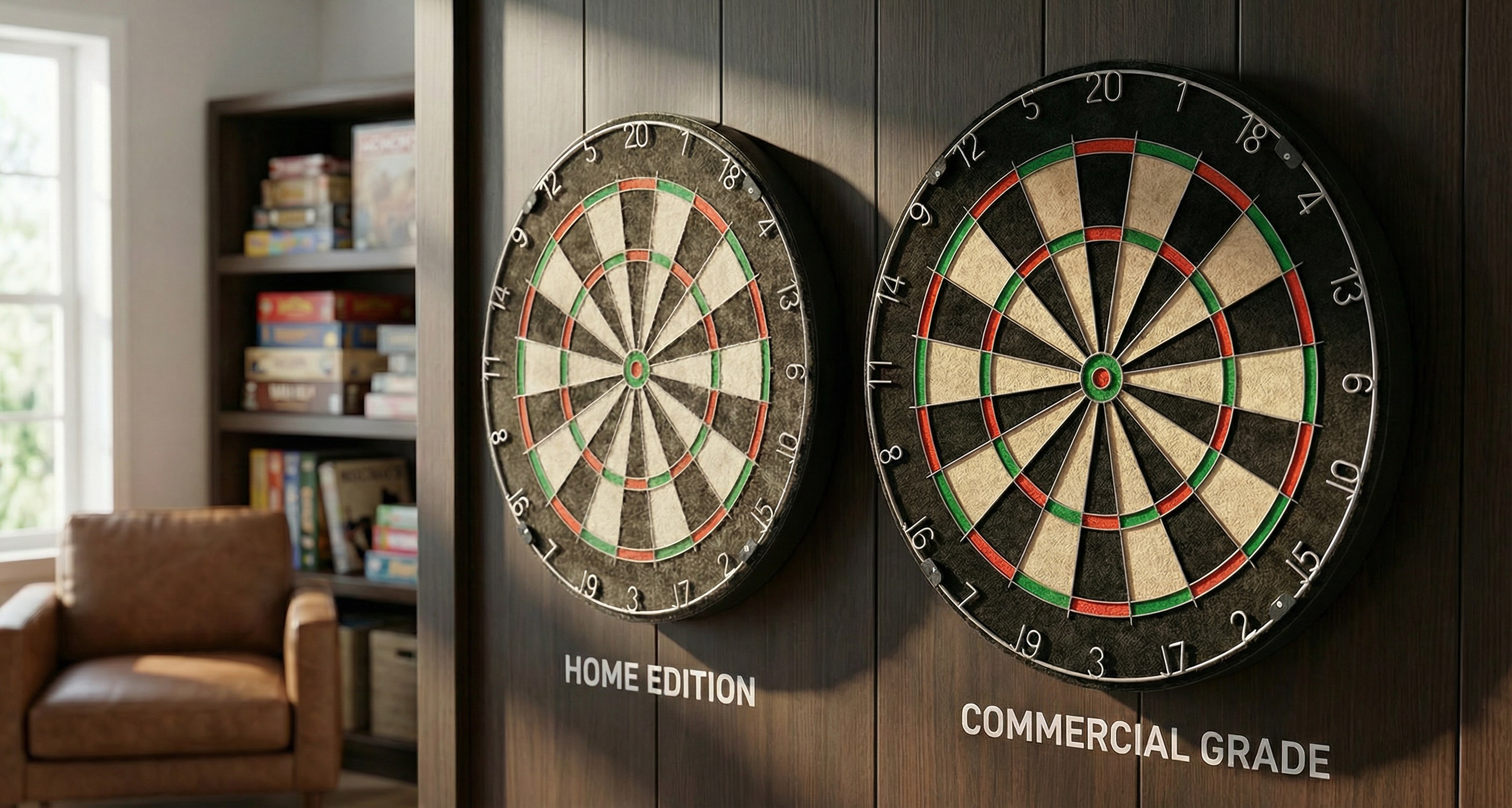
For these conditions, manufacturers typically design boards with medium compression density and slightly softer fiber structure.
This approach provides:
-
Easier dart penetration
-
Quieter impact sound
-
Strong self-healing for casual play
Using extremely hard, high-density boards at home can actually reduce enjoyment.
They tend to be louder and may cause more bounce-outs for less experienced players.
For most home users, balanced durability and comfort create the best long-term experience.
Choosing Dartboards for Clubs and Pubs: Designed for Constant Impact
Commercial venues face very different demands.
In busy clubs and pubs, dartboards are hit thousands of times every week, often in the same scoring areas.
To handle this level of use, professional dartboard manufacturers increase:
-
Sisal fiber density
-
Compression pressure during board forming
-
Structural reinforcement around high-impact zones
These heavy-duty boards maintain shape longer and resist rapid wear.
Manufacturers also embed blade wiring systems deeper into the board surface to reduce bounce-outs and prevent wire loosening.
For venue owners, this engineering results in:
-
Fewer board replacements
-
Lower maintenance costs
-
Consistent play quality
Choosing Dartboards for Tournaments: Precision Above All Else
Tournament dartboards are engineered primarily for accuracy and fairness.
Manufacturers focus on:
-
Uniform density across the entire surface
-
Exact segment proportions
-
Consistent wire placement
Even small dimensional differences can affect scoring accuracy and professional player confidence.
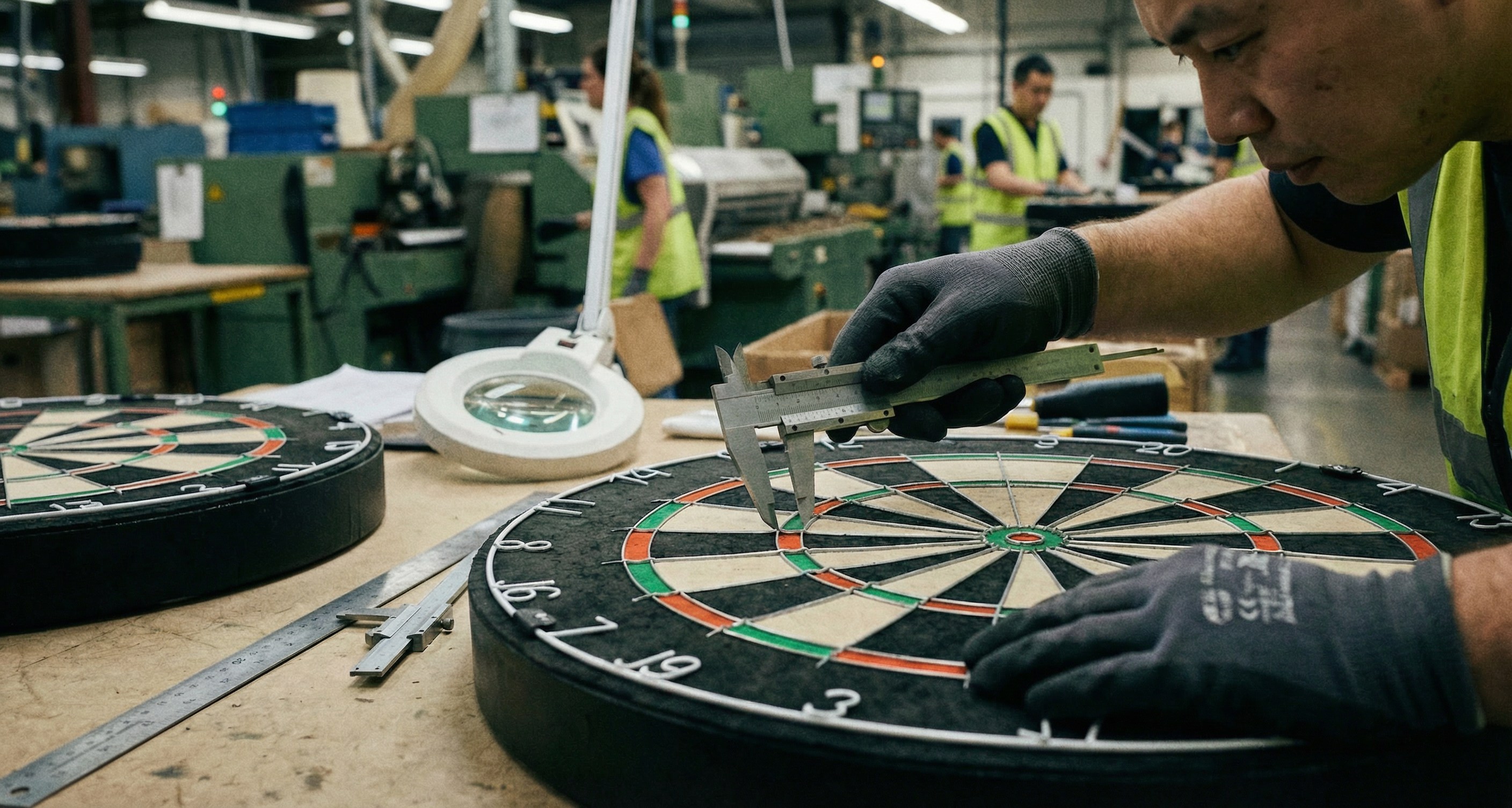
Professional factories apply strict controls such as:
-
Tight size tolerances within ±1–2 millimeters
-
Controlled compression mapping
-
Precision cutting templates
Each board is carefully inspected to ensure it performs consistently with others used in competition.
While tournament boards may not always last longer than heavy-duty club boards, they deliver the highest level of precision.
The Role of Blade Wiring Systems
Modern dartboards use thin blade wiring systems to guide darts into scoring zones while reducing bounce-outs.
However, wiring performance depends heavily on manufacturing quality.
Key factors include:
-
Wire thickness and flexibility
-
Depth of insertion into the sisal surface
-
Uniform spacing between segments
Poorly installed wiring can damage fibers and increase deflection over time.
Professional manufacturers balance wire firmness with fiber protection to maintain long-term performance.
Customization and Branding Possibilities
Beyond performance, many brands and venues require visual customization.
Manufacturers can offer:
-
Custom number rings
-
Logo printing on board faces or surrounds
-
Branded packaging
These features help maintain brand identity while using professional-grade structures internally.
Common Mistakes Buyers Make
Many quality issues stem from incorrect product matching.
Typical mistakes include:
-
Choosing ultra-hard boards for home environments
-
Using low-cost boards in heavy commercial settings
-
Ignoring sisal fiber quality
-
Focusing only on appearance rather than internal structure
Understanding manufacturing design logic prevents these problems.
Conclusion
There is no single dartboard that fits every environment perfectly.
The best choice depends on:
-
Usage intensity
-
Player skill level
-
Noise tolerance
-
Longevity expectations
Professional dartboard manufacturers design different structures to match these realities.
Selecting the right board improves performance, durability, and overall user satisfaction.
FAQs
1. Can one dartboard be used for home, club, and tournaments?
Yes, but performance and lifespan will not be optimized for all conditions.
2. How can buyers recognize high-quality sisal dartboards?
Look for uniform fiber density, strong self-healing, and minimal hard spots.
3. Do tournament boards last longer than commercial boards?
Not necessarily. Tournament boards prioritize precision, while commercial boards prioritize durability.
4. Are blade wiring systems always better than traditional wires?
Generally yes, when installed properly and paired with quality sisal.
5. How often should dartboards be rotated?
Regular rotation helps distribute wear and significantly extends board life.

