
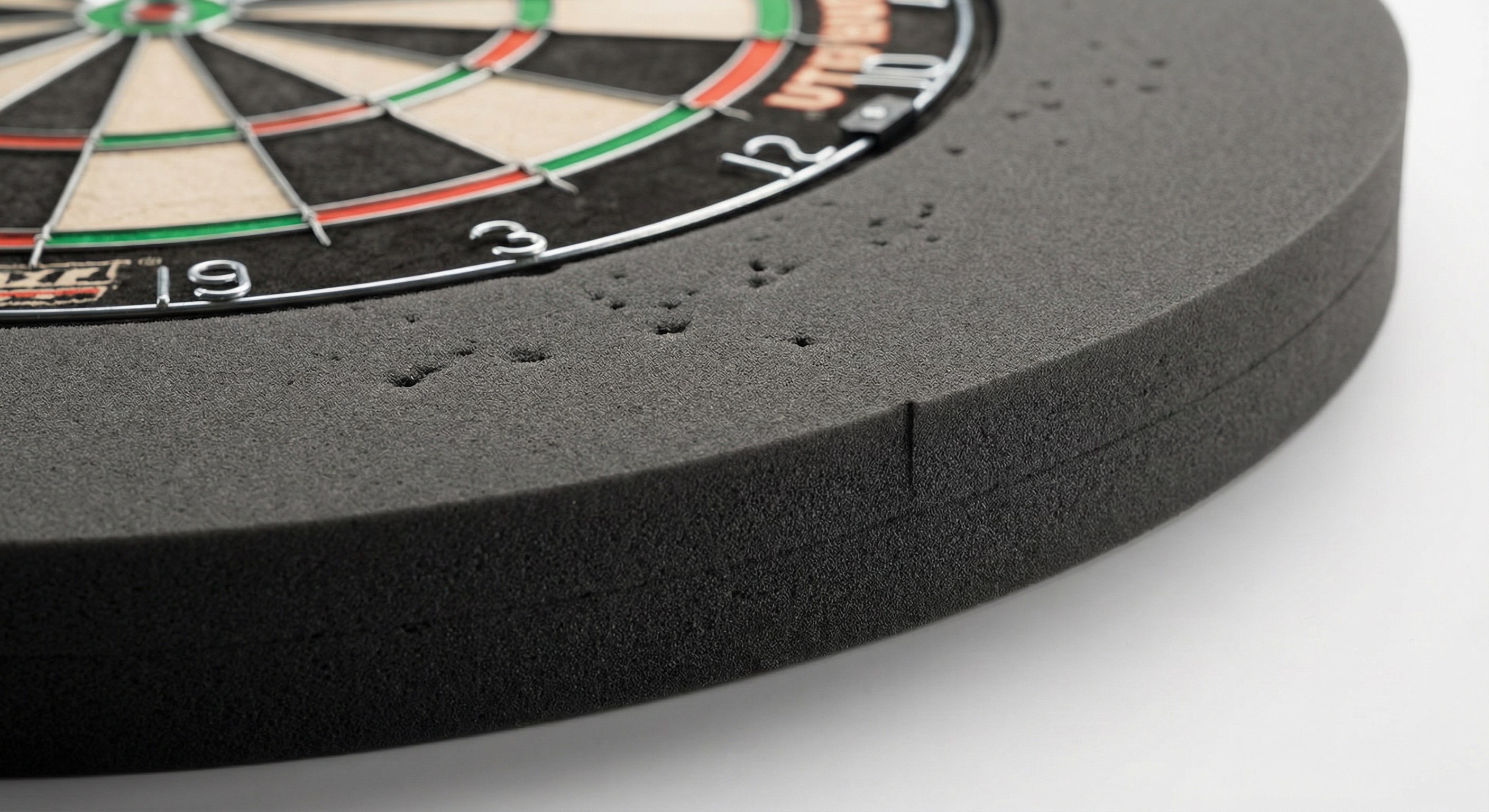
Why Dartboard Surround Quality Matters More Than Most Buyers Expect
Low-quality surrounds may look fine initially, but often suffer from:
-
Quick tearing at impact zones
-
Permanent holes after repeated hits
-
Loss of shape and compression
-
Fading logos and surface cracking
These issues lead to:
-
Frequent replacements
-
Negative customer feedback
-
Increased operational costs for venues
Professional dartboard manufacturers treat surrounds as functional protective equipment, not just decorative accessories.
Core Materials Used in Dartboard Surround Manufacturing
1. EVA Foam (Most Common)
EVA foam offers:
-
Good elasticity
-
Lightweight structure
-
Affordable cost
However, quality varies widely depending on:
-
Foam density
-
Cell structure uniformity
Low-density EVA tears easily.
High-density EVA provides far better impact absorption and longevity.
2. PU Foam (Higher Durability Option)
PU foam provides:
-
Higher tear resistance
-
Better shape recovery
-
Longer lifespan under heavy use
It is commonly used for:
-
Pub environments
-
Clubs
-
Commercial installations
Though more expensive, replacement frequency is significantly lower.
3. High-Density Polymer Blends (Premium Grade)
Some professional manufacturers develop custom blends to achieve:
-
Maximum durability
-
Superior noise absorption
-
Long-term color stability
These surrounds are designed for:
-
High-traffic venues
-
Professional training centers
-
Premium home setups
Thickness Options and Their Real-World Impact
Surround thickness directly affects:
-
Impact protection
-
Noise reduction
-
Product lifespan
Thin Surrounds (2–3 cm)
Best for:
-
Casual home use
-
Low-cost retail kits
Limitations:
-
Less durable
-
Limited protection for hard throws
Standard Surrounds (4–5 cm)
Most popular option for:
-
Home players
-
Small clubs
-
Amazon sellers
Benefits:
-
Balanced cost and protection
-
Suitable for frequent play
Heavy-Duty Surrounds (6 cm+)
Designed for:
-
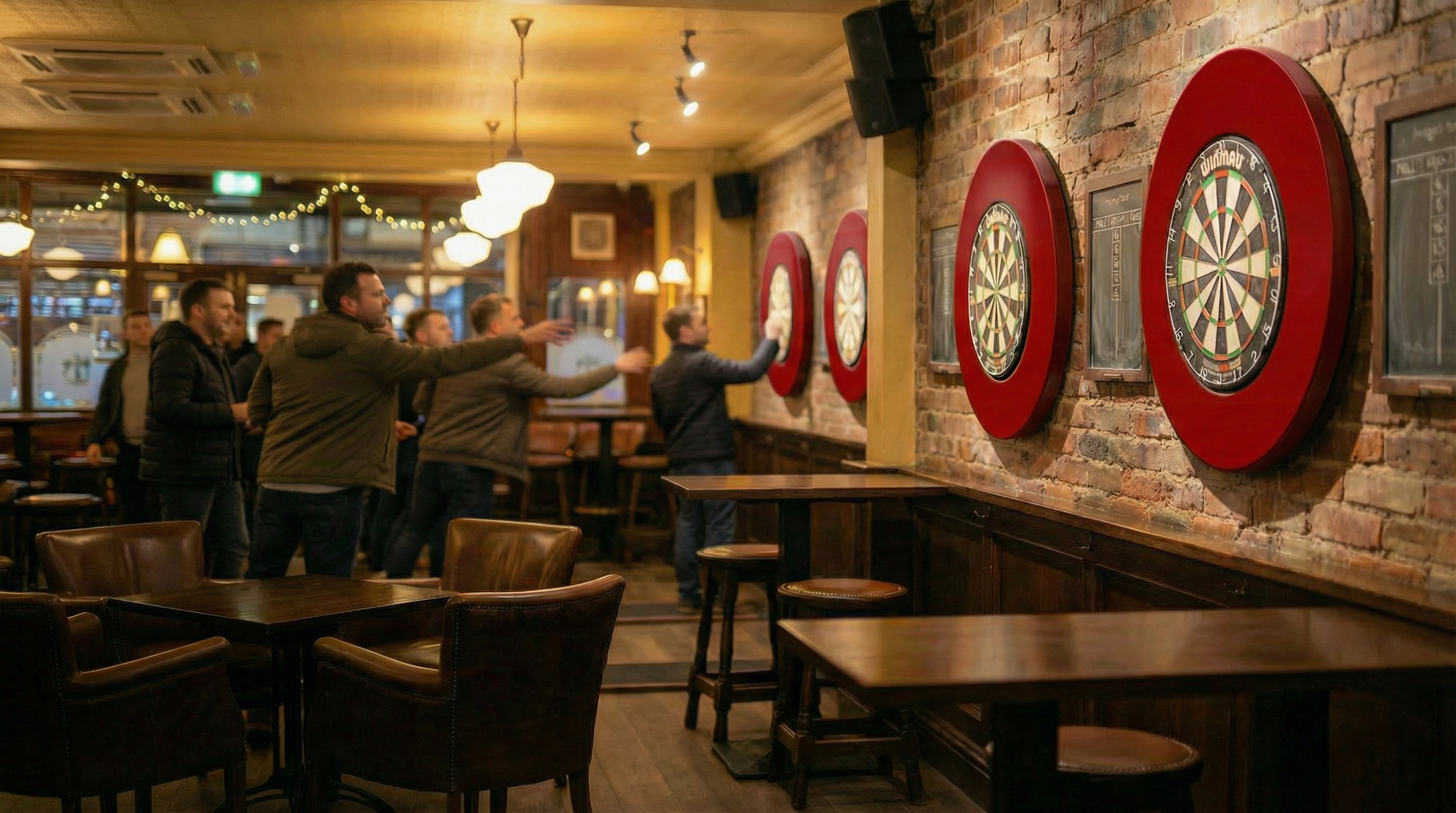
Busy pubs
-
Commercial venues
-
Training centers
Advantages:
-
Superior impact absorption
-
Minimal tearing
-
Long replacement cycles
How Professional Manufacturers Test Surround Durability
High-level dartboard manufacturers perform:
Impact Testing
-
Thousands of dart strikes in high-risk zones
-
Monitoring tear formation
Compression Recovery Testing
-
Measuring foam rebound after pressure
Surface Wear Testing
-
Repeated friction to simulate real play
UV & Color Stability Testing
-
Preventing fading in bright environments
These tests ensure surrounds last months or years—not weeks.
Noise Reduction: An Overlooked Benefit
Thicker and higher-density surrounds absorb:
-
Dart impact vibration
-
Board edge resonance
This significantly reduces noise levels, especially in:
-
Apartments
-
Game rooms
-
Bars with multiple boards
Noise reduction improves customer satisfaction and compliance with indoor noise restrictions.
Branding and Customization Opportunities
Modern OEM dart surround manufacturing allows:
-
Full-color logo printing
-
UV-coated surfaces for durability
-
Custom color matching to brand identity
-
Textured finishes
For brands, this transforms a functional product into:
👉 A marketing surface
👉 A premium product element
High-quality printing methods ensure logos do not crack or peel over time.
Packaging Considerations for International Shipping
Professional factories optimize surrounds for logistics by:
-
Compression packaging
-
Protective wrapping
-
Shape recovery testing after unpacking
This reduces shipping volume while ensuring product performance remains intact.
Conclusion
Dartboard surrounds are far more than foam accessories.
Material choice, thickness, manufacturing quality, and testing standards determine:
-
Durability
-
User experience
-
Replacement costs
-
Brand reputation
Smart brands treat surrounds as a strategic product component—not a cheap add-on.
FAQs
1. Which surround material lasts the longest in commercial environments?
High-density PU foam and polymer blends typically offer the best durability.
2. Is thicker always better for surrounds?
Generally yes for heavy use, but material density is equally important.
3. Can surrounds really reduce noise significantly?
Yes, especially thicker high-density versions designed for vibration absorption.
4. How long should a quality surround last in a busy pub?
With heavy-duty materials, often several months to over a year depending on traffic.
5. Are custom logos durable on surrounds?
With UV coating and proper surface treatment, logos remain intact long-term.

