
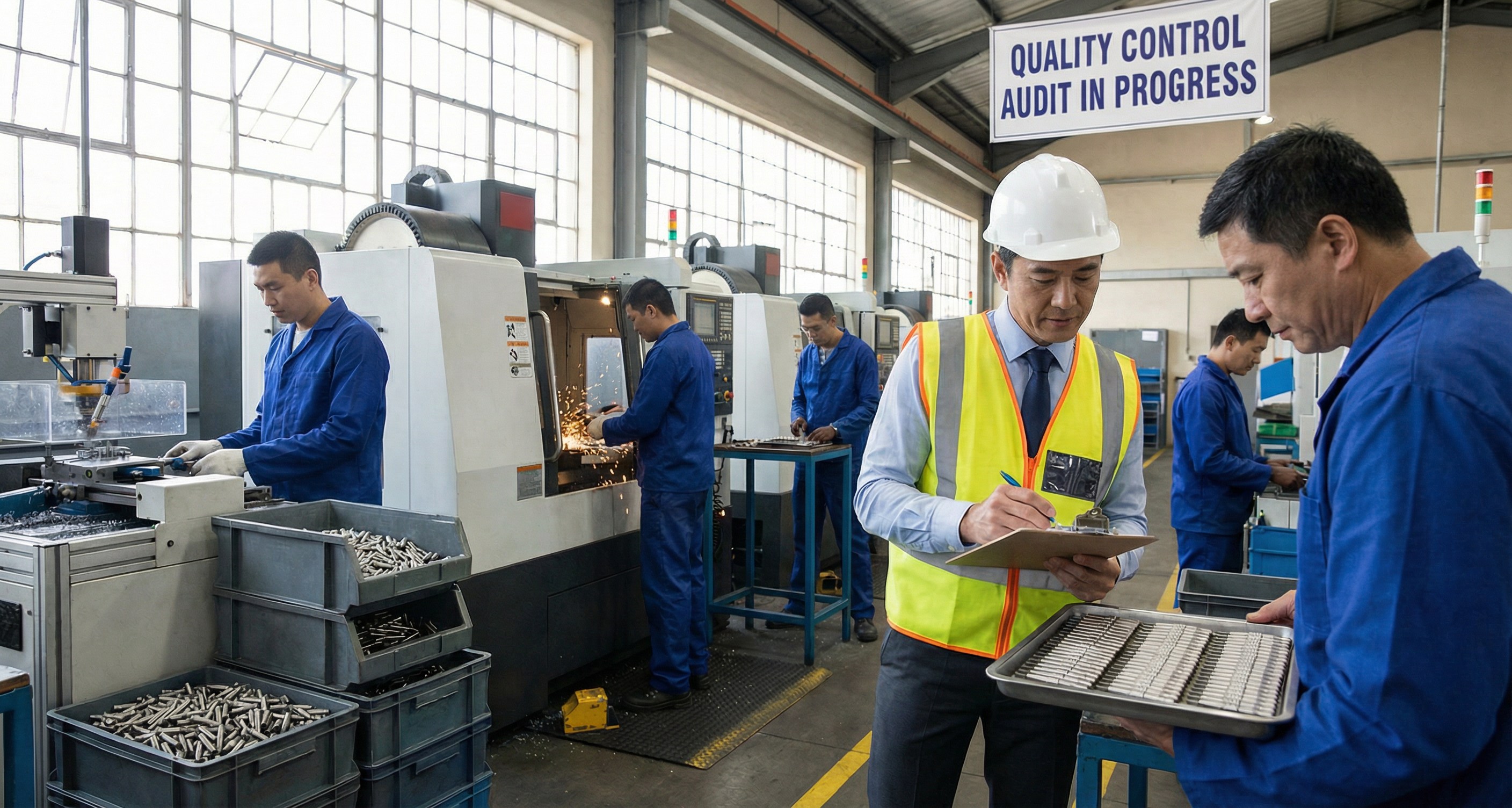
1. Evaluate Real Production Capability (Not Just Claims)
A reliable OEM factory must demonstrate actual production control, not just trading capability.
Key areas to verify:
CNC Machining Capability
- Number of machines
- Precision level
- Ability to maintain tight tolerances (±0.05g or better)
Process Coverage
Does the factory handle:
- Barrel machining
- Surface finishing
- Coating/plating
- Assembly
- Packaging
In-house control = higher consistency + faster problem-solving
2. Deep Dive into Quality Control Systems
A serious manufacturer should clearly explain:
- QC workflow (incoming → in-process → final inspection)
- Inspection frequency
- Defect classification standards (Critical / Major / Minor)
- Use of AQL standards
Ask for:
- Sample QC reports
- Historical defect rate data
- Real measurement records (not just pass/fail)
Factories with strong QC systems focus on data, not promises.
3. Verify Batch Consistency & Reorder Stability
Your first order is not the biggest risk—your second and third orders are.
Ask suppliers:
- How do you ensure repeatability?
- Do you archive CNC programs?
- Do you track material batches?
Look for:
- Consistent weight distribution across batches
- Stable grip feel over time
- Identical coating performance
Factories without systemized repeatability often deliver inconsistent reorders.
4. Assess Engineering & Problem-Solving Capability
Every factory can produce samples.
Only strong factories can solve problems when issues arise.
Evaluate:
- How they respond to technical questions
- Whether they explain root causes or give vague answers
- Their ability to suggest improvements
For example:
If grip feels too aggressive, can they:
- Adjust groove depth?
- Modify finishing process?
Engineering capability separates real manufacturers from basic suppliers.

5. Communication Efficiency and Transparency
Communication quality directly impacts:
- Development speed
- Error rates
- Project success
Good manufacturers provide:
- Clear timelines
- Honest feedback
- Proactive updates
Red flags include:
- Slow or inconsistent responses
- Avoiding technical details
- Overpromising unrealistic timelines
6. Experience with Your Target Market
Not all factories understand your business model.
Prefer suppliers experienced with:
- Amazon sellers (review sensitivity, packaging standards)
- EU/US compliance requirements
- Retail-ready packaging
They can anticipate issues before they happen.
7. Lead Time Reliability & Capacity Planning
Ask specific questions:
- What is your standard production lead time?
- How do you handle peak season demand?
- Do you maintain safety stock for materials?
Reliable factories:
- Plan production schedules in advance
- Maintain buffer capacity
- Communicate delays early
Unreliable factories react only after problems occur.
8. Cost Structure vs Long-Term Value
Lowest price ≠ best choice.
Low-cost suppliers often reduce cost by:
- Using lower-grade materials
- Skipping QC steps
- Reducing inspection frequency
This leads to:
- Higher return rates
- Negative reviews
- Brand damage
Evaluate total cost, including:
- Defects
- Delays
- Rework
9. Request a Trial Order with Measurable Criteria
Before committing to large volume:
Set a trial order with clear evaluation metrics:
- Weight tolerance consistency
- Grip feel uniformity
- Packaging durability
- On-time delivery
Use this to validate real production—not just samples.
10. Build a Long-Term Partnership Mindset
The best OEM relationships are partnerships, not transactions.
Strong manufacturers:
- Track your product history
- Improve processes over time
- Help optimize cost without reducing quality
Switching suppliers frequently often creates more problems than it solves.
Common Red Flags to Avoid
Be cautious if a supplier:
- Cannot explain their QC system
- Refuses to share production data
- Offers prices far below market level
- Provides inconsistent answers
- Cannot guarantee reorder consistency
These are signs of high long-term risk.
Practical Buyer Checklist (Quick Evaluation)
Before choosing a supplier, confirm:
- ✔ In-house production capability
- ✔ Documented QC system
- ✔ Batch traceability
- ✔ Reorder consistency proof
- ✔ Clear communication
- ✔ Realistic lead times
If multiple boxes are unchecked, reconsider.
Conclusion
Choosing the right OEM dart manufacturer is about risk management and long-term thinking.
The best suppliers are not those who promise the most—they are those who:
- Control their processes
- Share real data
- Deliver consistent results
Brands that choose carefully build stable, scalable businesses.
FAQs
1. What is the most important factor when choosing a dart manufacturer?
Consistency across multiple production batches.
2. Should I choose a supplier based on price?
Only after verifying quality systems and reliability.
3. How can I test a manufacturer before large orders?
Start with a trial order and measure performance data.
4. Is in-house production necessary?
It significantly improves quality control and accountability.
5. How do I know if a factory is reliable long-term?
Review their QC data, communication, and reorder stability.

