
Introduction
Darts is a game of precision, and having the right set can make all the difference. Whether you’re a beginner or a seasoned player, understanding what makes a good set of darts is crucial for improving your game. This guide will break down the key components—barrel material, weight, grip, flight shape, and shaft type—to help you choose the perfect darts for your playing style.
A well-balanced set of darts enhances accuracy, control, and consistency. From tungsten barrels for durability to customizable flights for better aerodynamics, each feature plays a role in performance. By the end of this article, you’ll know exactly what to look for in a high-quality set.
Barrel Material: Tungsten vs. Brass vs. Nickel-Silver
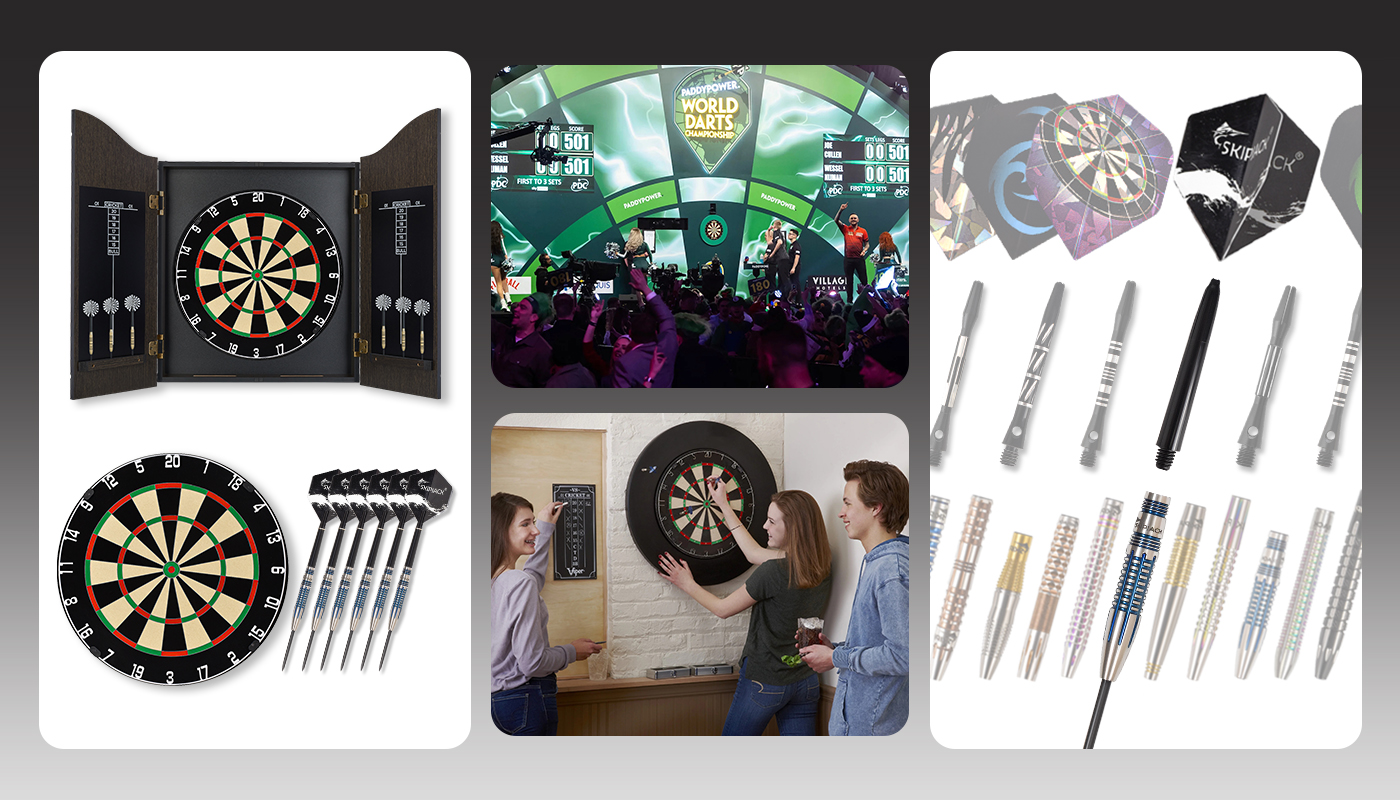
The barrel is the most critical part of a dart, and its material affects weight distribution and durability. Tungsten is the top choice for professional players because it’s dense, allowing for slimmer barrels without sacrificing weight. This means tighter groupings and better control. Brass darts are cheaper but less durable, making them ideal for casual players or beginners. Nickel-silver offers a middle ground with decent durability and a polished finish.
For competitive play, tungsten darts (80-95% tungsten content) are highly recommended. They resist wear and tear while maintaining a consistent grip over time. If you’re just starting, brass or nickel-silver darts are budget-friendly options to practice with before upgrading.
Weight: Finding the Right Balance
Dart weight typically ranges from 18 to 50 grams, but most players prefer 20-30 grams. Lighter darts (18-22g) allow for faster throws but require more precision, while heavier darts (25-30g) offer stability and are easier to control. Your ideal weight depends on your throwing style—experiment to see what feels most natural.
Beginners often benefit from mid-weight darts (22-26g) as they balance speed and control. Pro players might customize based on their grip and throw technique. Remember, there’s no “perfect” weight—consistency matters more than the number on the scale.
Grip: Texture and Finger Placement
A dart’s grip determines how well you can hold and release it. Common grip styles include:
-
Ringed grips – Best for players who prefer a secure hold.
-
Knurled grips – Offer a rough texture for added control.
-
Smooth grips – Suited for players with a light, fluid throw.
Your grip style should match your throwing motion. If you tend to grip tightly, a textured barrel will prevent slipping. For a looser hold, a smoother surface may work better. Try different grips to see which improves your accuracy.
Flight Shape: How It Affects Aerodynamics
Flights (the fins at the back of the dart) come in various shapes: standard, slim, kite, and teardrop. Larger flights (standard/kite) slow the dart down, providing more stability, while smaller flights (slim/teardrop) reduce drag for faster throws.
If your darts wobble mid-air, try a larger flight. If they drop too quickly, a smaller flight might help. Many players experiment with different shapes to fine-tune their throws.
Shaft Type: Nylon vs. Aluminum vs. Carbon Fiber
Shafts (the part connecting the barrel to the flight) impact balance and durability. Nylon shafts are lightweight and affordable but can break easily. Aluminum shafts are sturdy but may bend over time. Carbon fiber offers the best blend of strength and flexibility, though they’re pricier.
For beginners, nylon shafts are a practical choice. Advanced players may prefer aluminum or carbon fiber for longevity and performance.
Conclusion
Choosing the right darts comes down to barrel material, weight, grip, flight shape, and shaft type. Whether you’re a casual player or a competitive enthusiast, the perfect set should feel comfortable and enhance your throw.
For top-quality darts, check out Skipjack Darts—they offer precision-engineered tungsten darts with customizable options for every playing style. Visit Skipjack Darts to find your perfect match and elevate your game today!
FAQs About Choosing Darts
What’s the best weight for beginners?
Mid-weight darts (22-26g) are ideal for beginners, offering a balance of control and ease of throw.
How often should I replace dart flights?
Flights wear out over time—replace them when they show tears or bends that affect flight stability.
Are expensive darts worth it?
Higher-quality materials (like tungsten) last longer and improve accuracy, making them a smart investment for serious players.

