
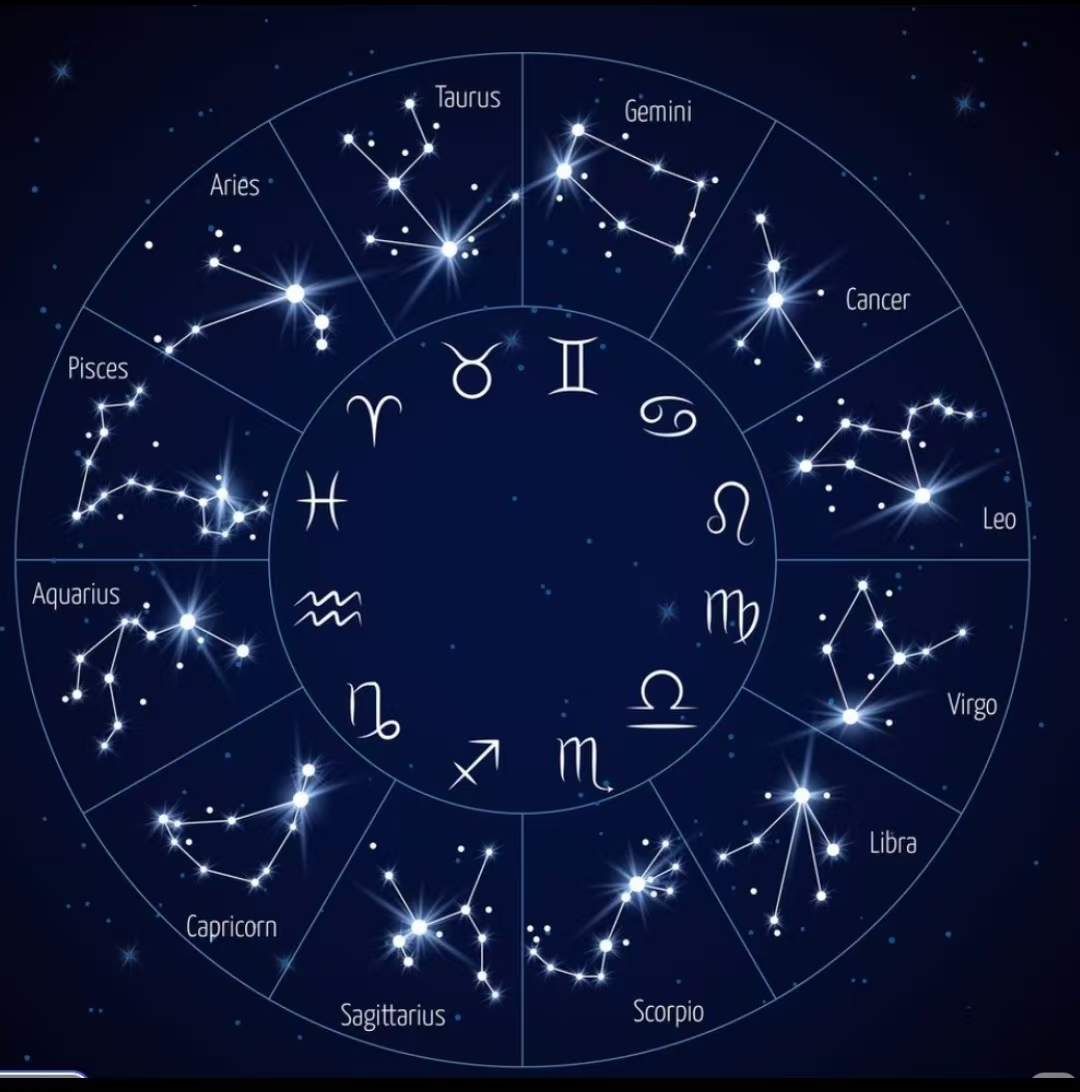
Gregorian and lunar calendars, Western Constellations and Twenty-eight Lunar Mansions .
The same date, two systems of interpretation.
Which is more orthodox? Which is more accurate? Which is more relevant?
The winner is yours to decide.
First Debate: Origin Time – Who is the True Ancestor of the Stars?
Where do the twelve zodiac signs truly come from? Which civilization laid the earliest foundation? Which system took shape first, became structured first, and spread widest? And what standard should we use to measure the “orthodoxy” of a celestial system?
Affirmative: Western Constellations
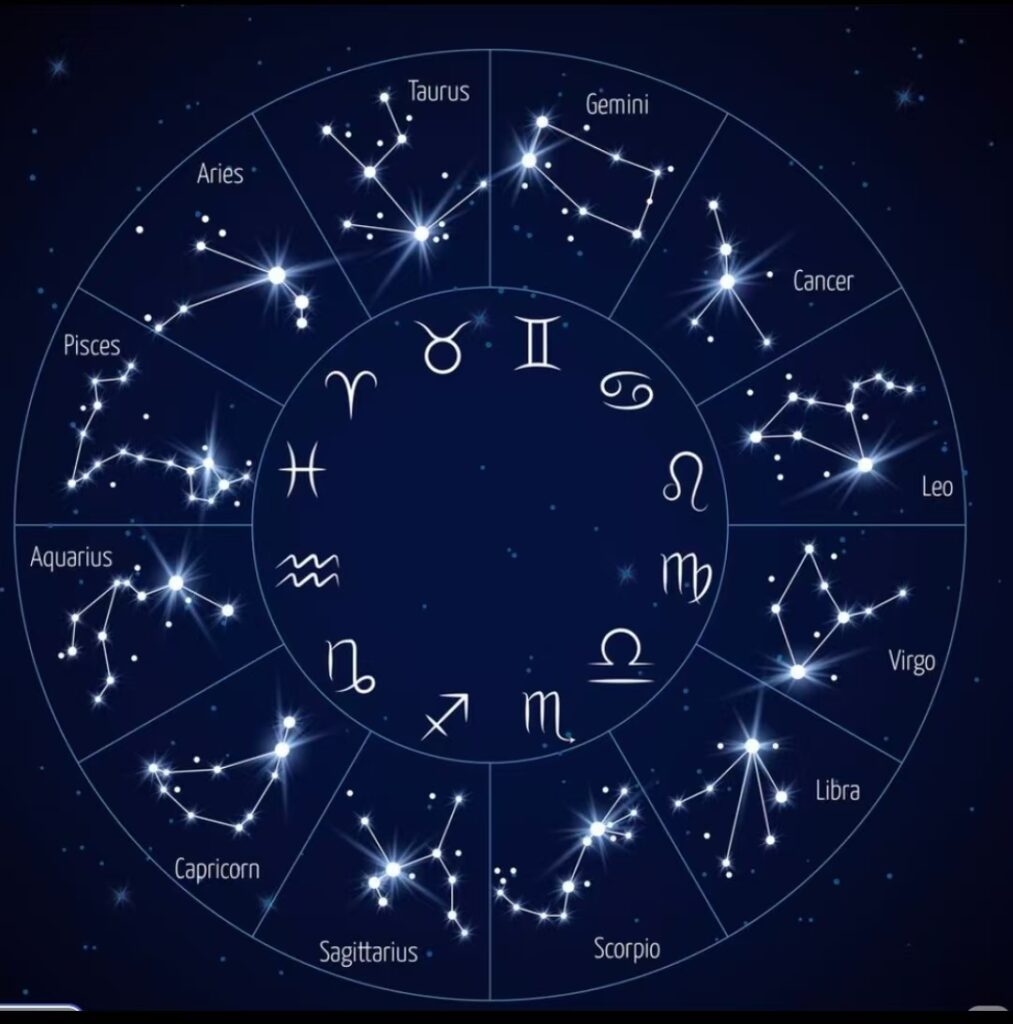
Western Constellations first emerged in Sumerian and ancient Babylonian civilizations. As early as 3000–2000 BC, star clusters were mapped for agriculture and timekeeping. Around 2000 BC, the early twelve-part zodiac division was established, later passed to ancient Greece and continuously refined. In the 2nd century AD, Ptolemy formally codified the twelve-sign system in his Almagest, creating the globally recognized framework we use today. With an early origin, clear structure, and immense global influence, it stands as a foundational system of astrology.
Opposing: Chinese Lunar Mansions
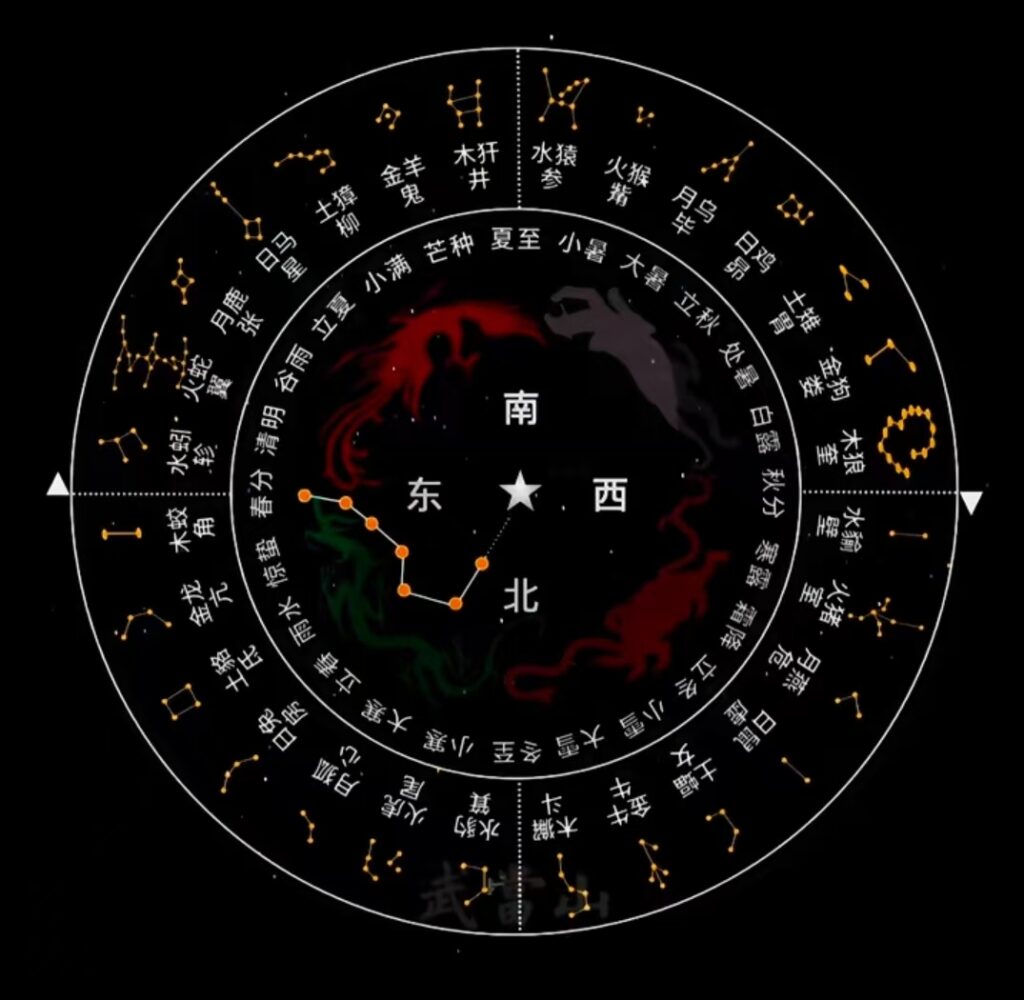
Chinese astronomical observations date back to the Neolithic age. The clam-shell dragon and tiger constellations from Henan’s Xishuipo site, around 6,500 years old, attest to early stargazing traditions. Constellation names in‐scribed on Shang oracle bones reveal an unbroken observational lineage. By the Warring States period, the Twenty-Eight Mansions were fully established, as evi‐denced by relics from the tomb of Marquis Yi of Zeng. The Twelve Earthly Branches and astrological signs also evolved for calendrical and seasonal use. By the Han Dynasty, these systems — the Twenty-Eight Mansions, Twelve Astrological Sections, solar terms, and official calendars — were fully integrated into an independent, original, logical, and highly practical astronomical system.
So should orthodoxy be determined by which system was finalized earlier, or by which civilization began observing the stars first?
Which interpretation of the night sky do you consider more orthodox?
Second Debate: Precision of Division – Whose Framework Is More Logical?
When dividing the night sky, which logic is more rigorous and aligned with actual celestial movements? What standard defines the scientific validity of a celestial system?
Affirmative: Western Constellations
Western Constellations uses the ecliptic — the apparent annual path of the Sun — as its foundation, dividing the celestial sphere into twelve equal sections, each spanning 30 degrees of ecliptic longitude, corresponding to the twelve named zodiac signs. This system is highly uniform, easy to memorize, and simple to spread. Supported by systematic calculations in Ptolemy’s Almagest and ancient Greek zodiac catalogs, its twelve-sign division became standardized, serving as a key reference for ancient Western astronomy and calendar-making.

Opposing: Twenty-eight Lunar Mansions
Chinese Lunar Mansions are not uniformly spaced. Instead, they are divided into twenty-eight unequal sectors based on the actual distribution of star groups near the ecliptic and the celestial equator. Together with the Three Enclosures system, they cover the main observable regions of the northern celestial sphere in its entirety. The division is grounded in actual astronomical observations. The positional accuracy reflected in surviving documents such as the Dunhuang Star Chart was world-leading among its contemporaries, and the system aligns more closely with the real distribution of stars in the night sky.
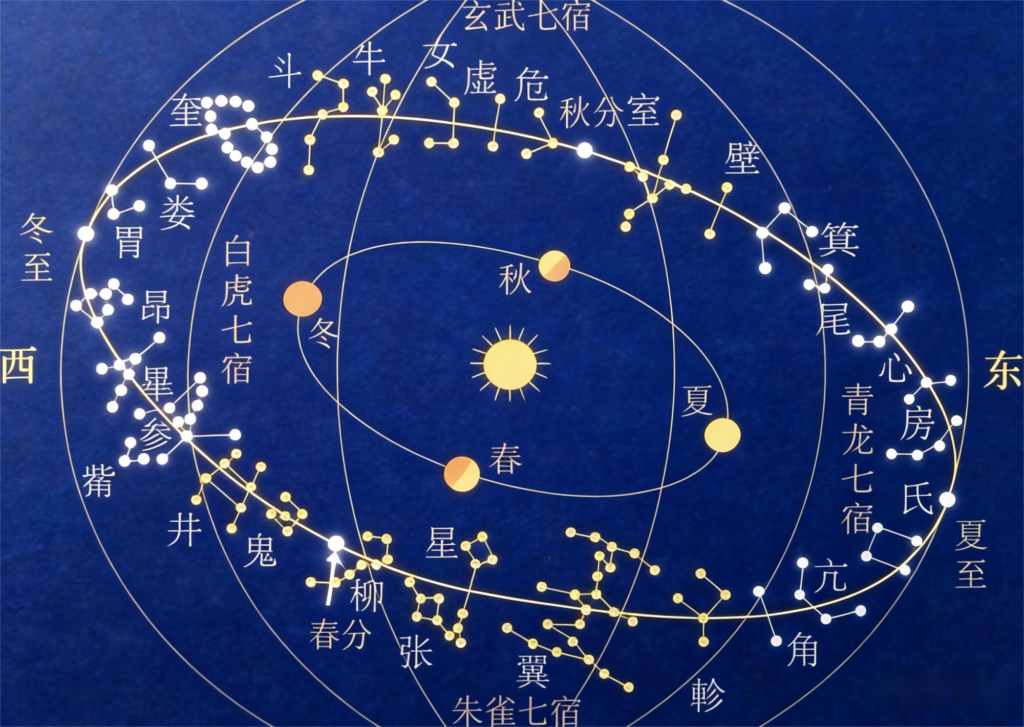
Twelve equal sectors versus twenty-eight customized divisions: two fundamentally different approaches to mapping the sky.
Should the standard be simplicity and memorability, or observational accuracy and celestial fidelity?
Which celestial philosophy do you favor?
Third Debate: Practical Value – Which Purpose Serves Us Better?
Both are celestial systems, but which connects more closely to life and better answers the needs of the times? How should we measure the true value of an astrological system?
Affirmative: Western Constellations
In early times, Western Constellations were mainly used for celestial observation and timekeeping, maritime navigation, and calendar making, serving highly practical purposes. Today, they are more commonly applied to personality analysis, romantic compatibility, and daily horoscope readings. With accessible content and strong engagement, they have become one of the most popular social topics and forms of mass entertainment.
Opposing: Chinese Lunar Mansions
Chinese Lunar Mansions were equally practical in their early days. Primarily used to guide agricultural scheduling, formulate calendars based on stellar observations, and divine national destiny, they formed the core of ancient Chinese astronomy, calendar systems, and ritual institutions. Today, they serve as a vital carrier of traditional Chinese astronomical culture, sustaining their value in cultural research, historical tracing, and traditional aesthetic creation, while embodying profound astronomical wisdom and cultural heritage.

Should we judge the value of a star system by everyday popularity or by cultural heritage?
Which expression of celestial value do you identify with more?
Some follow Western trends; others honor Eastern heritage.
The debate has never ended — nor should it.
The stars know no borders, and the gaze of both civilizations deserves to be seen.
We do not choose sides. We integrate them.
E MYTH Star Darts series
Riding the trend of Western constellations while embracing the cultural essence of Eastern lunar mansions. Through design, we transcend civilizational boundaries, allowing these two celestial aesthetics to collide and coexist in harmony.

On March 31, the E MYTH Star Darts series — Aries · Jianglou ,will make its global debut.
Stay tuned!
Dedicated to Promoting the Sport of Darts
Whatsapp: https://wa.link/q6olmi
Email: bcsports13@163.com

