

Most know the basics of darts but not the specifics of formal competition rules. Many see it as a leisure activity and rarely explore tournament regulations. In fact, darts has diverse disciplines and detailed rules with distinct format differences. Even non-competitors can better follow events and enhance their spectating experience by understanding these rules.
An Overview of Darts Competition Rules
The ‘01’ series is standard in international and domestic official tournaments—mainstream and well-regulated. Common starting scores include 101, 301, 501, 801, and 1001 (any number ending in 1 works in principle). The 501 format dominates major events like the World Darts Championship, British International News Championship, and China’s inaugural Darts Open. Below is an explanation of ‘01’ rules using 501 as an example.
1. Number of Participants
No limit on total players; matches are typically 2 individuals or 2 teams.
2. Scoring Areas
All dartboard segments are usable, with high-value ones (e.g., 20, 19) preferred. Their double and triple rings are common targets. The specific double ring for the final checkout depends on remaining points and can be any double.
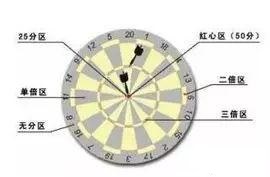
3. Rules (501 Example)
Matches start at 501 points. Opening order is decided by a throw-off (closest to bullseye goes first), with two start styles: double-in (score only if hitting a double segment) or straight-in (no restrictions). Players throw 3 darts per round; total scores are deducted from remaining points. The goal is to be first to reduce points to exactly 0, with the final winning dart hitting any double segment (including bullseye)—failure means further throws. Hitting a score exceeding remaining points is a ‘bust’: the round’s score is void, remaining 2 darts are forfeited, and play passes to the opponent immediately.
4. Path to Victory
Winning 501 requires mastering dartboard scoring probabilities and point combinations. For double-in, focus on one side of the board to boost hit chances for the target or adjacent doubles. Aim for high-value segments (20 or 19) for a maximum 180 points per round (3 darts). Checkout requires a double, prioritizing 20x, 16x, or 12x. Mastering combinations is key—e.g., clearing 154 points needs triple 20, triple 18, and double 20 in 3 darts. Lack of familiarity with the dartboard or checkout calculations hurts performance; practicing optimal point combinations significantly improves match results.
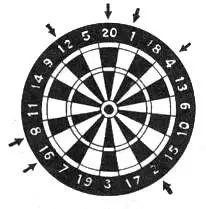
Darts may seem easy but requires strategy, arithmetic, and mental toughness. Mastering 01 (especially 501) core rules and checkout strategies helps beginners quickly grasp the game, understand competitions, and appreciate its tactical charm.
