
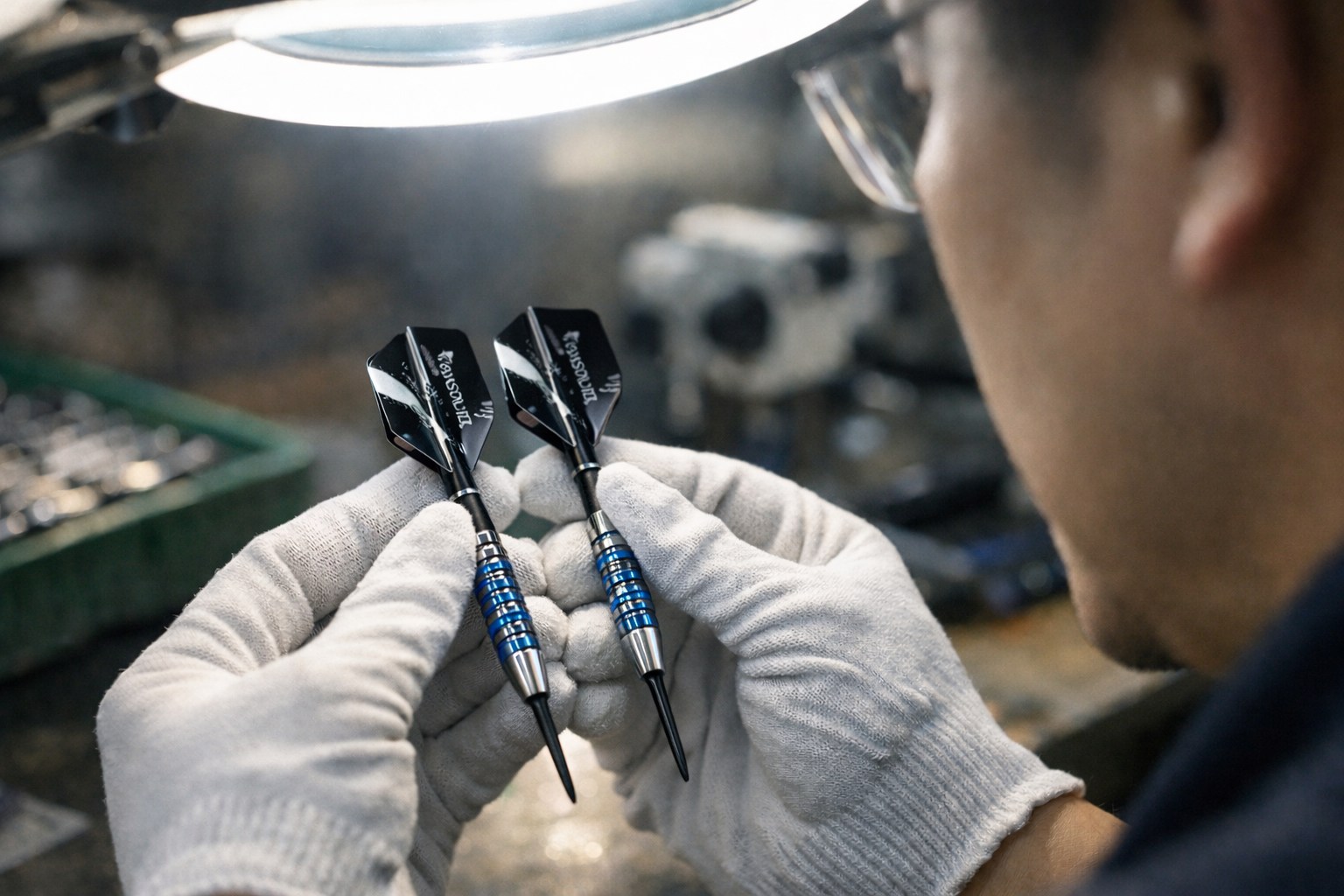
QC Problem 1: Weight Drift During Long Production Runs
What Buyers Experience
-
First cartons feel perfect
-
Later cartons feel slightly heavier or lighter
-
Players complain about inconsistency within the same SKU
From a buyer’s perspective, this looks like “poor control.”
From a factory perspective, it is usually tool and process drift.
Root Causes Inside the Factory
Weight drift commonly comes from:
-
CNC cutting tools wearing gradually during long runs
-
Small dimensional changes accumulating over hundreds of barrels
-
No mid-shift recalibration protocol
-
Operators relying on start-of-shift settings only
Even when final weight stays “within tolerance,” balance and feel can already be compromised.
How Professional Dart Manufacturers Prevent It
Professional factories implement:
-
Defined tool life limits (not “use until broken”)
-
Mid-batch weight sampling checkpoints
-
Automatic stop-and-adjust rules once deviation trends appear
-
Historical weight charts to compare early vs late batch data
This turns weight control from a static check into a dynamic monitoring system.
QC Problem 2: Grip Sharpness Inconsistency
What Players Notice
Players may say:
-
“Some darts feel sharper than others”
-
“Grip feels aggressive at first, then smooth later”
This is one of the fastest ways to generate negative reviews.
Why This Happens
Grip inconsistency usually results from:
-
Manual polishing without defined limits
-
Different operators interpreting “acceptable grip” differently
-
No reference samples available on the production floor
-
Surface finishing processes affecting grip depth unpredictably
Many factories underestimate how sensitive players are to grip feel.
Prevention at Manufacturer Level
Professional dart manufacturers define grip as a controlled parameter, not an aesthetic feature.
They use:
-
Approved grip reference samples stored on-site
-
Defined acceptable grip depth ranges
-
Standardized finishing times and pressure
-
Post-finishing grip feel verification
This ensures grip consistency across sets and across batches.
QC Problem 3: Coating Failure and Premature Wear
Symptoms Seen by Customers
-
Coating scratches easily
-
Color fading after limited use
-
Uneven finish within the same set
These issues damage perceived quality immediately, even if performance is unaffected.
Common Manufacturing Causes
Coating problems are rarely caused by the coating itself.
They are usually caused by poor preparation.
Typical root causes:
-
Inadequate surface cleaning before coating
-
Inconsistent coating thickness
-
Incorrect curing temperature or time
-
No adhesion testing
Professional Prevention Methods
High-level factories treat coating as a process chain, not a single step.
Controls include:
-
Mandatory pre-coating cleaning protocols
-
Coating thickness verification
-
Adhesion and abrasion testing
-
Aging tests to simulate real use
This ensures coatings perform under real player conditions, not just on day one.
QC Problem 4: Poor Set Matching (The Silent Killer)
Why This Problem Is Often Missed
Individually, each dart may pass inspection.
As a set, they feel wrong.
This happens when:
-
Barrels are inspected individually
-
Assembly ignores set-level balance
-
Matching is skipped to save time
Players feel this immediately, even if numbers look acceptable.
Professional Assembly Standards
Professional dart manufacturers inspect at two levels:
-
Individual dart level
-
Set level
Set-level controls include:
-
Matching three darts by weight and feel
-
Verifying balance consistency across the set
-
Visual alignment and finish consistency
This dramatically reduces “feels off” complaints.
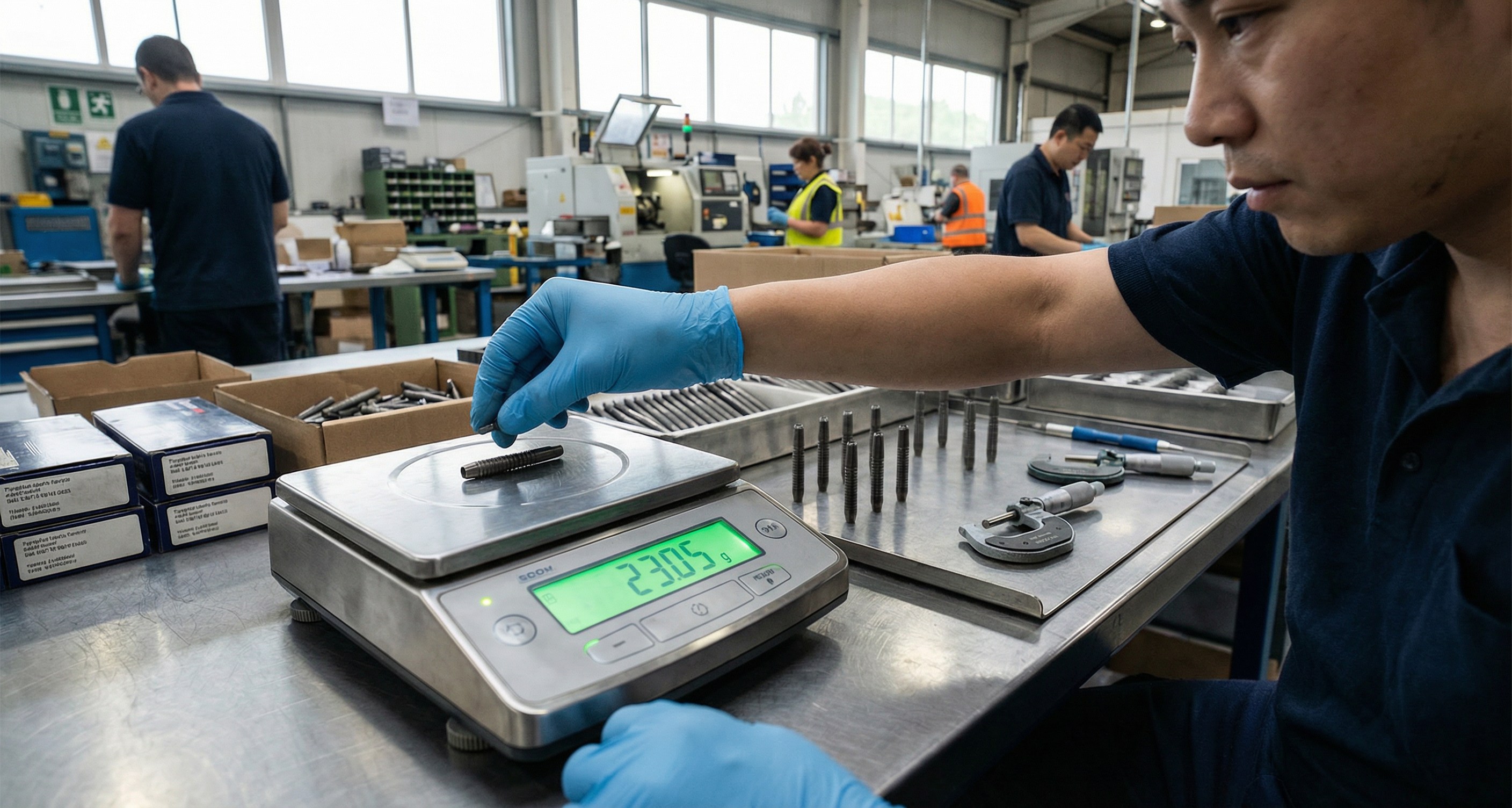
QC Problem 5: Packaging-Related Quality Failures
Why Packaging Is a QC Issue, Not Just Marketing
Many quality complaints occur after shipping, not after production.
Common problems include:
-
Darts damaged during transit
-
Flights bent or crushed
-
Incorrect components packed
These issues are often blamed on logistics, but the root cause is packaging design and final QC.
How Professional Factories Control Packaging Risk
Advanced manufacturers treat packaging as part of the QC system.
They implement:
-
Drop and vibration testing
-
Final packing verification checklists
-
Random carton inspection before shipment
-
Clear packing specifications per SKU
This reduces post-delivery complaints significantly.
Why QC Must Be Preventive, Not Reactive
Low-level QC asks:
“Did this product pass?”
High-level QC asks:
“Why might this product fail later?”
Professional dart manufacturers focus on:
-
Process stability
-
Trend detection
-
Root cause analysis
-
Continuous improvement
This approach protects long-term reorder stability, not just first shipment success.
What Buyers Should Audit When Evaluating QC Capability
When auditing a dart manufacturer, buyers should ask:
-
Are QC standards documented or verbal?
-
Is there historical QC data for previous batches?
-
Are rejection thresholds clearly defined?
-
Is QC integrated into production, not just at the end?
Factories that answer clearly are usually the ones worth keeping long-term.
Conclusion
Most dart QC problems are predictable.
They appear when factories rely on inspection instead of systems.
Professional dart manufacturers prevent problems by controlling processes, documenting history, and treating QC as a core capability—not a cost.
Brands that choose such partners protect not only product quality, but also reputation, reviews, and long-term growth.
FAQs
1. Is 100% inspection necessary for darts?
Yes. Darts are weight-sensitive products where small deviations affect performance and perception.
2. Can third-party QC replace factory QC?
No. Third-party QC can verify results, but only factory QC can control processes.
3. Why do QC issues often appear only after reorders?
Because system weaknesses usually emerge under scale and repetition.
4. How can buyers verify real QC capability?
Ask for QC flowcharts, historical defect rates, and batch comparison records.
5. Does stronger QC always increase manufacturing cost?
Not necessarily. Preventing returns and rework often reduces total cost.

