
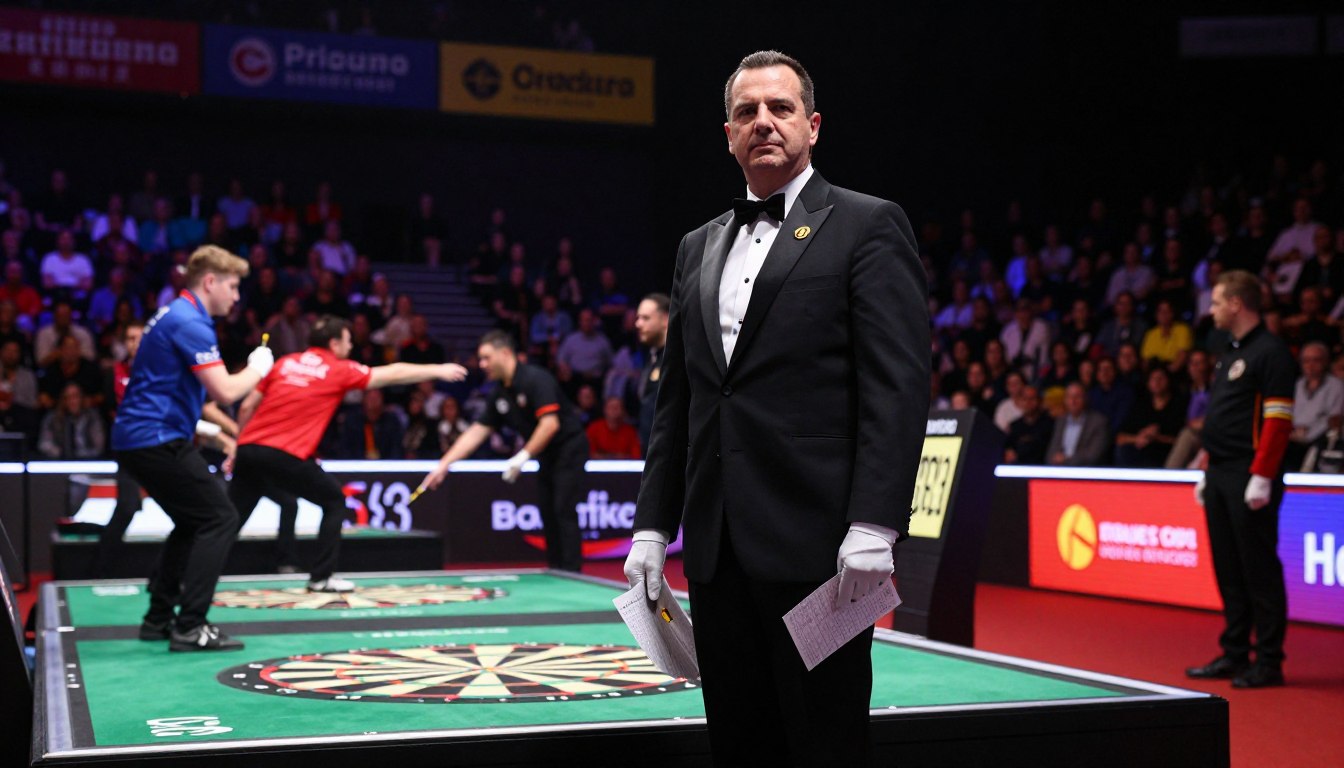
“Some certificates are ‘chicken rib’—tasty but little value; others truly matter.” Which side does the Darts Referee Certificate fall on?
As darts becomes more professional, the question matters: is the Darts Referee Certificate essential for career growth, or just another credential? Skill still wins matches, but formal officiating standards and accreditation can shift you from a casual player to a trusted official.
This short overview gives clear information to help you decide if certification is the right part of your development: what it covers, who benefits, and the main reasons to pursue it. Read on to see which path fits your goals.
Key Takeaways
- Certification standardizes officiating across levels and reduces disputes.
- A certificate can open doors to tournament roles and professional pathways.
- Pursue accreditation only if it aligns with your career plan—otherwise it may be just a paper credential.
The Growing Landscape of Competitive Darts in the United States
Competitive darts in the U.S. is maturing: venues, organized leagues, and paid events are replacing casual pub play. This shift creates demand from players and organizers for consistent officiating, coaching, and short professional courses that teach match management and scoring.
A recent local example is the opening of Dart Zone at 1033 Reeves St., where the owners invested about $25,000 in specialized arenas to attract events and serious players. (Fact check: confirm address and investment figure before publishing.)
The takeaway: as more venues and events appear, leagues need trained referees and reliable training hours to keep matches fair. Next: an overview of what the Darts Referee Certificate covers and who benefits from taking the course.
Defining the Darts Referee Certificate and Its Purpose
The Darts Referee Certificate is a formal accreditation that verifies you understand the rules, scoring mechanics, and match-management skills needed to officiate reliably. It’s a practical step for anyone who wants to move from casual play into recognized officiating roles.
This certification establishes clear officiating standards across levels (local, regional, national) and signals to tournament directors that you can handle disputes, timing, and the pressures of live events. (Note: check with your national or regional darts organisation for exact names, renewal rules, and official recognition.)
The table below summarizes how certified officials differ from casual observers.
| FeatureCasualCertified | ||
| Rule knowledge | Basic/local | Comprehensive |
| Dispute handling | Informal | Structured |
| Professionalism | Ad hoc | Standardized conduct |
| Career impact | Limited | Eligible for tournament roles |
In short: the certificate is an information-rich, practical overview and a clear step in your officiating progression—useful when the role and level you seek require formal recognition.
The Argument for Professionalism: Why Certification Matters
As darts grows into a recognized sport, consistent officiating becomes essential: certified referees bring the skills and professional standards needed to run fair matches at every stage, from local leagues to national events.
Certification is more than a badge—it trains officials in clear rules, decision-making, and match management. That shared framework keeps play consistent whether the venue is a pub, a dedicated arena, or a televised stage.
Standardizing Rules and Regulations
One common problem in league management is varying rule interpretation. A short course and standardized protocol give officials a common language, reducing disputes and speeding resolution during tense moments.
When referees follow the same procedures, players and directors know what to expect—fewer arguments, cleaner event flow, and better conditions for coaching and player development.
Enhancing Credibility in Local Leagues
Certified officials elevate a league’s reputation. Leagues that prioritize trained referees attract more serious players, sponsors, and repeat attendance—helping organizers grow reliable events.
For referees, certification builds transferable skills (rules, dispute handling, time management) that open opportunities across regions and stages. Next: the skeptic’s view—does certification actually add value, or is experience enough?
| FeatureNon-CertifiedCertified | ||
| Rule interpretation | Variable | Consistent |
| Dispute resolution | Slow/tense | Efficient |
| League reputation | Casual | Credible |
The Skeptic’s View: Is a Darts Referee Certificate Just a Piece of Paper?
Many experienced players argue that officiating wisdom comes from time at the oche, not a classroom. That view is understandable: grassroots darts is driven by passion and on‑the‑job learning, and some referees rise through years of local play.
Why skeptics doubt it
Skeptics say courses can feel theoretical, and that real disputes and match pressure only teach you so much. At times, a seasoned player’s instincts outperform checklist-based rules—especially in fast, informal matches.
Where certification helps
Certification isn’t a replacement for experience; it’s a way to standardize how experience is applied. A short coaching course or referee session provides a clear protocol for scoring, timing, and conflict resolution—useful when a local event scales up or when players demand consistency.
Example: a certified referee at a regional event resolved a scoring dispute in minutes by following a preset protocol, preventing delays and calming players—something inconsistent house rules often fail to achieve.
“True mastery in officiating comes from matching hands‑on experience with disciplined training.”
In short: if your goal is to officiate casually, times spent playing may be enough; if you want to officiate events, lead coaching sessions, or progress to higher stages, a short accredited course adds reliable, transferable skills.
| FeatureGrassrootsCertified | ||
| Rule knowledge | Situational | Standardized |
| Conflict handling | Variable | Consistent |
| Career path | Local only | Event eligibility |
Analyzing the Value of Darts Certificate and Darts Referee Certificate in Global Contexts
A consistent, world‑level approach to officiating depends on recognized credentials. International organisations (for example, the World Darts Federation and regional associations publish rule standards that help ensure a referee in the United States handles a match the same way a referee in Europe or Asia would. Aligning local certificates with these benchmarks supports fair play across stages and areas of competition.
International Standards and Their Influence
When local leagues adopt global rules, the development of players and officials benefits: events run smoother, directors trust outcomes more, and the overall quality of play rises. A darts certificate that maps to recognised international guidance signals that a holder knows the game’s global expectations.
To check recognition, compare the issuing organisation’s syllabus and accreditation with the relevant world or regional body—look for shared rulebooks, listed partner organisations, or cross‑acceptance statements on official pages.
Bridging the Gap Between Amateur and Pro
A 飞镖裁判员证书 (darts referee certificate) functions as a practical progression step: it formalizes the skills needed to move from local hobbyist roles to paid or director‑level officiating at larger events. For aspiring referees, this credential is a clear way to demonstrate readiness for higher stages and international opportunity.
| FeatureAmateurCertified | ||
| Rule knowledge | Local | Aligned with world standards |
| Event readiness | Limited | Ready for regional/national stages |
| Recognition | Area-specific | Broader / transferable |

Mission and Vision for Darts Development
We aim for sustainable darts development across the United States by bridging casual play and professional officiating standards. That means practical coaching, repeatable courses, and accessible learning resources so more people can step into referee roles with confidence.
Learn more about our approach and resources on our site: https://emythdarts.com/ — our pages explain course formats, expected hours, and how training maps to real event roles.
How E MYTH Supports Aspiring Officials
We offer a compact ecosystem designed to speed up learning and career progression: short instructor‑led courses, one‑on‑one coaching with experienced referees, and downloadable rule guides that act as a reliable reference on the board.
| Support PillarService ProvidedImpact on Official | ||
| Technical training | Scoring mechanics course | Improved accuracy |
| Mentorship | One-on-one coaching sessions | Faster progression |
| Resources | Digital rulebook & syllabus page | Standardized knowledge |
| Community | Networking events | Event opportunities |
Practical Skills Gained Through Certification Programs
Our courses focus on hands-on skills: accurate scoring, time and session management, and calm dispute resolution. These are the same skills tournament directors look for when hiring officials.
Mastering Scoring Mechanics and Dispute Resolution
Course modules teach you to track scores reliably, spot errors fast, and communicate rulings clearly. Practical drills plus mock matches develop the composure needed under pressure.
- Identify and correct scoring mistakes in real time.
- Apply rule-based communication to resolve conflicts.
- Keep match flow while enforcing standards.
Maintaining Composure Under Pressure
Holding a 飞镖证书 (darts certificate) shows organizers you can perform under stress. Our training includes scenario practice so you learn to manage heated moments professionally.
“A great referee is the calm center of a storm, ensuring the spirit of the game remains untarnished by competition.”
Career Opportunities for Certified Referees
A 飞镖裁判员证书 (darts referee certificate) opens pathways from local leagues to regional and national events. Certified referees are more likely to be selected for paid roles and director positions at larger stages.
Pathways to Professional Tournament Officiating
Start with a short course and coaching sessions, gain experience in local events, then use accreditation and references to qualify for regional tournaments and beyond.
Networking Within the Darts Community
Beyond skills, certification connects you to coaches, directors, and other officials. That network is often how people find consistent event roles and progress their careers.
The Cost-Benefit Analysis of Pursuing Certification
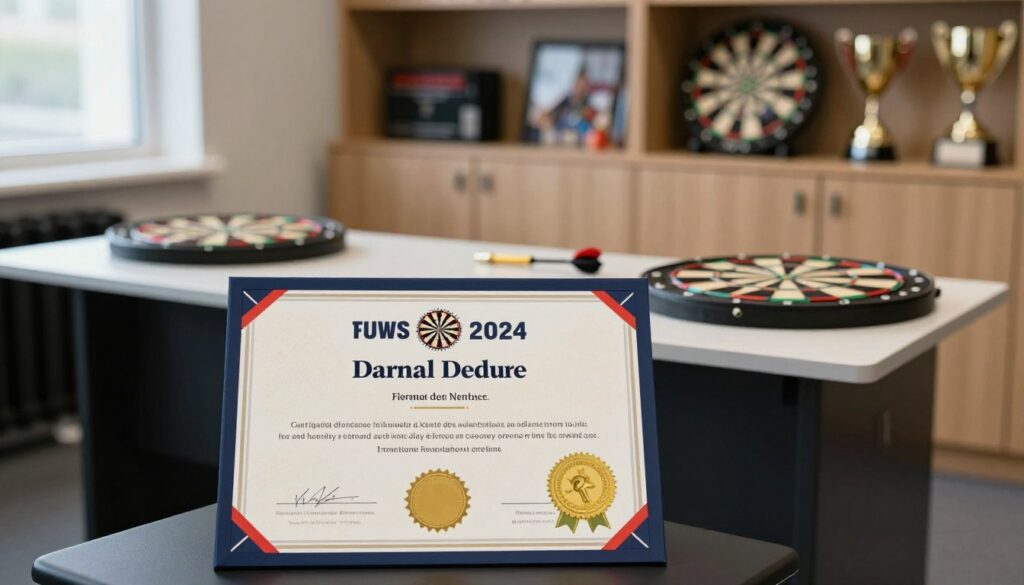
Think of certification as a professional investment. Costs vary by course and region; common expenses include accreditation fees, course materials, and travel to events. The upside: credibility, prioritized selection for events, and clearer career progression.
Time Investment Versus Career Advancement
Courses typically range from short weekend sessions to multi-session courses; total hours depend on level. Invest time up front, and you gain credibility that speeds access to higher-level events and roles.
“The quality of your future is determined by the investments you make in your expertise today.”
Financial Considerations for Aspiring Referees
Typical costs include accreditation fees, training materials, and travel. Prices vary—check the course page for exact figures—but view them as strategic spending that can return paid opportunities.
- Accreditation fees: administrative costs for certification.
- Training materials: guides and digital resources for ongoing learning.
- Travel & participation: event attendance to gain experience.
Holding a recognized positions you as a trusted official and can pay off through event roles and networking.
How to Get Started with Professional Training
Begin with a starter course: one weekend session plus a coaching follow-up is often enough to get you officiating local events. Look for courses that include a syllabus page, stated hours, and coach bios.
Connecting with E MYTH for Guidance
Ready to start? Visit https://emythdarts.com/ for course details, or contact us directly: WhatsApp https://wa.link/q6olmi or email bcsports13@163.com. Enroll in a starter course to get a syllabus, schedule, and estimated costs.
Securing your 飞镖证书 is more than a credential—it’s a practical pathway to skills, people, and opportunities in competitive darts.
The Future of Darts Officiating in the Digital Age
Holding a Darts Referee Certificate today means more than rule knowledge; it increasingly requires comfort with digital tools. The sport’s digital transformation is changing how officials track scores, present results, and manage events—examples include integrated scoring platforms and live-match dashboards used at larger events.
Technological Integration in Scoring
Modern tournaments use software to log throws, reduce arithmetic errors, and provide real‑time data for players and viewers. These tools let officials focus on match flow and rules enforcement rather than manual calculations, improving fairness and spectator information.
“Technology is the bridge between the tradition of the game and the limitless potential of its future.”
The Evolving Role of the Referee
The referee’s role is shifting from manual scorer to tech‑savvy match manager. Today’s referees need basic digital skills—operating scoring interfaces, handling simple hardware issues, and producing post‑match reports—alongside traditional judgement and people management.
- Proficiency with scoring interfaces and dashboards.
- Ability to troubleshoot basic hardware or connectivity issues during an event.
- Use of match data for reporting and performance review.
Conclusion
The remains a practical route to influence the sport’s future: it teaches standards, prepares you for modern event tech, and signals credibility to organisers worldwide. If you want to take officiating seriously, certification plus hands‑on experience is the fastest way to reach higher stages.
Ready to move forward? For course information, hours, and enrollment, visit our course page or contact E MYTH directly (see page links above). The right certification is a small time investment that can open event opportunities and lasting roles in professional darts.

