
Step 1: Raw Material Selection and Incoming Inspection
Production starts with raw materials, where quality control begins before any machining happens.
-
Dart barrels: Brass or tungsten alloy rods are sourced with certified density and composition
-
Dartboards: Natural sisal fibers with controlled moisture content (typically 10–12%)
-
Plastic components: High-impact ABS or nylon for shafts and soft tips
Before entering production, materials are inspected for:
-
Density deviation (±1–2%)
-
Surface defects and oxidation
-
Batch consistency
In professional factories, 100% of incoming materials are recorded and traceable by batch number.
Step 2: CNC Machining of Dart Barrels
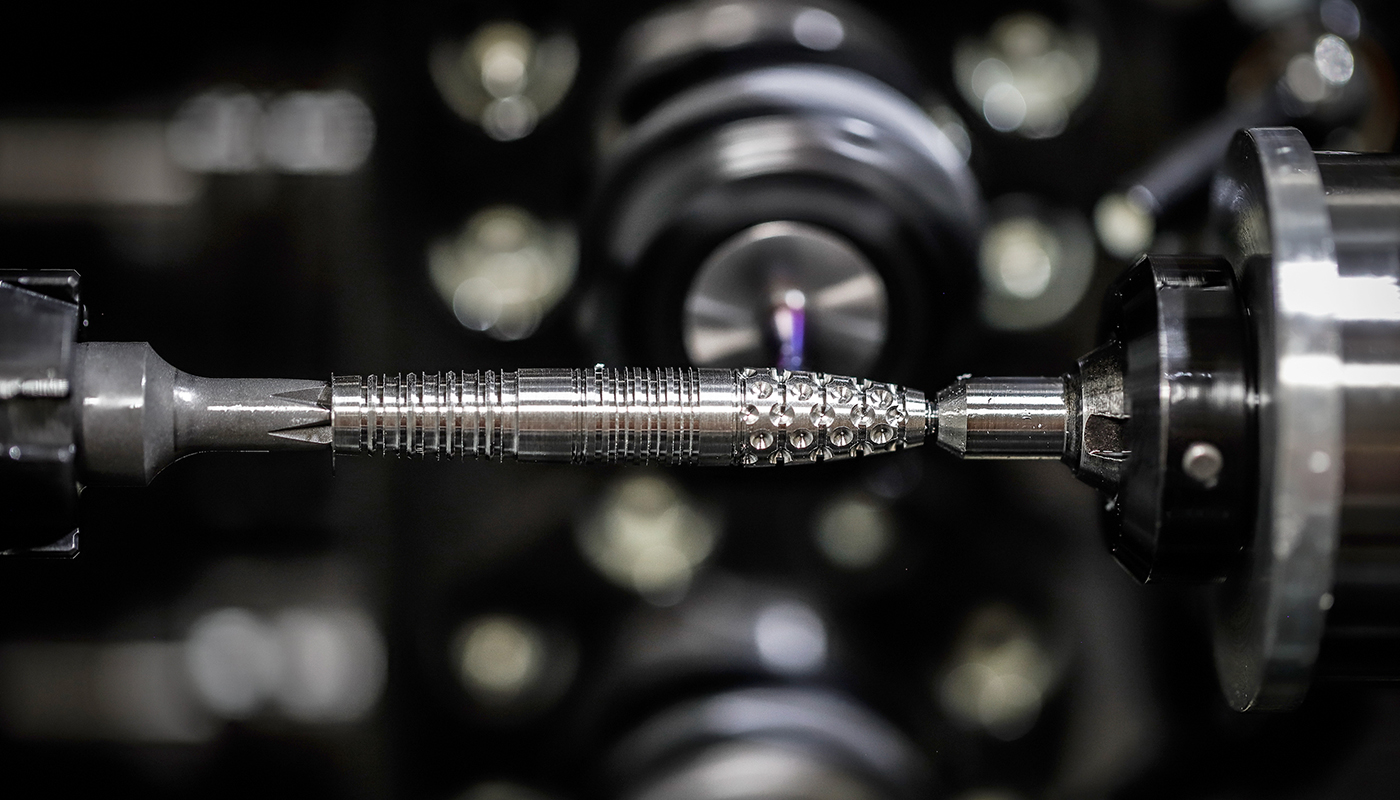
Dart barrels are shaped using CNC lathes, which allow tight tolerance control and repeatable designs.
-
Weight tolerance: usually controlled within ±0.05–0.1 g per barrel
-
Grip depth: adjusted based on grip pattern design
-
Production speed: one CNC machine can produce 300–500 barrels per day, depending on complexity
After machining, barrels are polished or coated (PVD, electroplating, or sandblasting) to improve grip feel and corrosion resistance.
Step 3: Shaft, Tip, and Flight Manufacturing
While barrels are machined, other components are produced simultaneously.
Shafts
-
Injection molded under high pressure
-
Flexibility tested to prevent breakage
-
Thread accuracy checked for smooth assembly
Tips
-
Steel tips: heat-treated for hardness and durability
-
Soft tips: tensile strength tested to reduce bending and breakage
Flights
-
Printed using UV or offset printing
-
Cut to standardized shapes
-
Thickness commonly ranges from 100–150 microns, balancing durability and flight stability
Step 4: Dartboard Manufacturing and Assembly
For traditional dartboards, sisal fibers are:
-
Compressed under controlled pressure
-
Aligned vertically to improve self-healing
-
Cut into scoring segments with precision molds
Wiring systems and number rings are installed afterward.
A professional dartboard manufacturing line focuses on reducing bounce-outs while extending board lifespan.
Step 5: Assembly and Customization
At this stage, individual components are assembled into complete dart sets.
Factories offering OEM services also support:
-
Laser engraving or logo printing
-
Custom color combinations
-
Private-label packaging and retail-ready boxes
Assembly lines typically achieve 95–98% first-pass yield, with defective units removed before final inspection.
Step 6: Quality Control and Performance Testing
Quality control is conducted at multiple stages, not only at the end.
Common inspections include:
-
Random weight re-checks (AQL standards applied)
-
Grip consistency testing
-
Tip durability tests (multiple impact cycles)
-
Visual inspection under standardized lighting
In most professional dart factories, 5–10% of finished products are randomly sampled for final performance testing.
Step 7: Packaging and Export Preparation
Before shipping, products are packed using impact-resistant inner packaging.
Export-ready dart factories provide:
-
Bulk or retail packaging options
-
Carton drop testing for international transport
-
Support for sea, air, or express logistics
Clear labeling and documentation help reduce customs delays for overseas buyers.
Conclusion
Inside a professional dart factory, precision, data control, and standardized processes define product quality. From raw material inspection to CNC machining and final testing, every step of the dart manufacturing process is designed to deliver consistent performance at scale.
For brands, distributors, and importers, choosing a factory with transparent production standards and measurable quality control means fewer risks, better consistency, and stronger long-term partnerships.
FAQ
1. What weight tolerance is considered acceptable for professional darts?
Most professional factories control dart barrel weight within ±0.05–0.1 grams, ensuring consistent balance.
2. How long does full dart production usually take?
Standard production time ranges from 3 to 6 weeks, depending on order size and customization.
3. How does a factory reduce defective products?
Through multi-stage inspections, CNC automation, and sampling tests that remove defects before packaging.
4. Can factories handle large OEM or private-label orders?
Yes. Professional dart factories are designed for scalable production while maintaining consistent specifications.
5. Why is factory process transparency important for buyers?
Clear production data and testing standards reduce quality risks and build long-term trust between buyers and manufacturers.

