

Tungsten is not a precious metal—precious metals include only gold, silver, and six platinum group metals (ruthenium, rhodium, palladium, osmium, iridium, platinum). The focus on tungsten content originated from early dart sales strategies. With few selling points beyond barrel shape and knurling, salespeople used “90%” and “95%” tungsten content as a marketing gimmick. As early salespeople often doubled as mentors, experts, association leaders, or coaches, their claims were seen as authoritative, perpetuating the focus on tungsten content today.
Tungsten content in professional darts does not affect accuracy, nor does it represent status, value, or collectibility. It is merely an auxiliary attribute and should not be the primary criterion for evaluating dart value. Core drivers of dart pricing and value: brand strength, celebrity endorsement, and cultural influence.
Intrinsically, higher tungsten content eases dart barrel engraving, enabling more complex patterns while maintaining standard weight. Compared to darts of the same barrel shape and weight, high-tungsten darts are more refined, aesthetically pleasing, and offer a superior quality feel. Additionally, advanced CNC machining allows some 80% tungsten darts to feature intricate, attractive patterns and a solid feel, delivering better value for money.
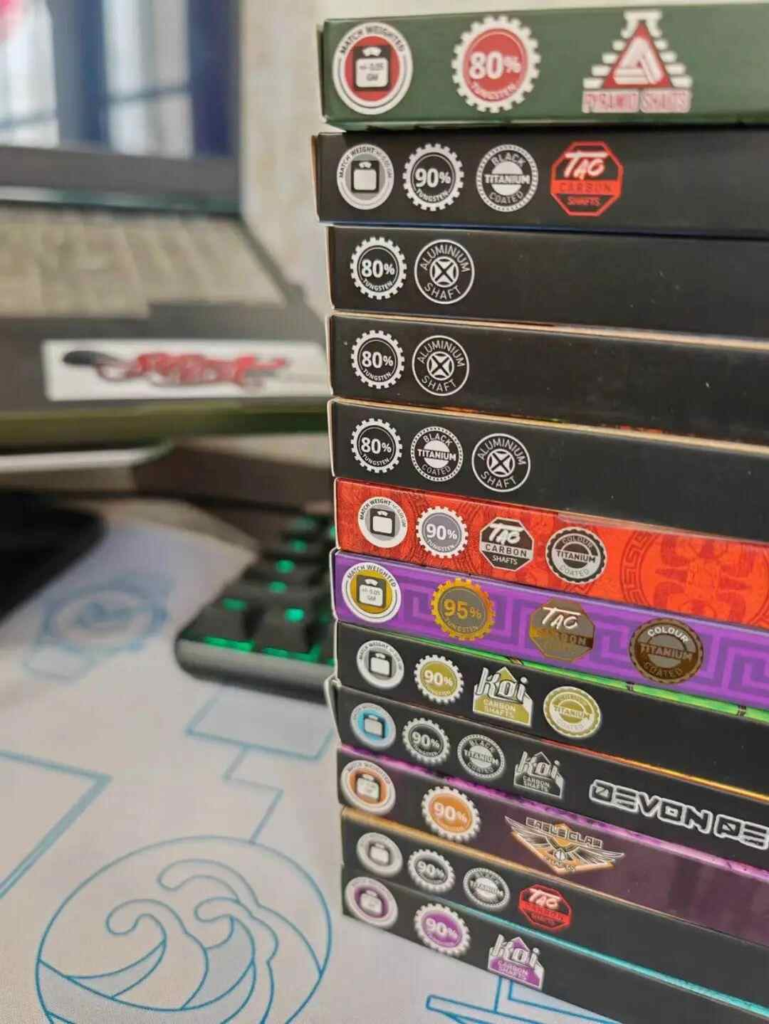
I. Domestic Market Perception of Tungsten Content
Domestic dart enthusiasts hold a skewed view of tungsten content, overemphasizing it while neglecting core attributes like pattern and barrel shape. In Dart Planet community promotions, many refused to buy products with less than 90%, 95%, or even 97% tungsten content. They equate tungsten content to Moutai’s alcohol content, trapped in preconceived biases and unwilling to accept alternative perspectives.
II. Is the Tungsten Content Marked on Packaging Accurate?
Tungsten content marked on dart packaging is not entirely accurate and should only serve as a reference. Some brands have claimed darts have “95% tungsten at the front and 90% at the back,” but cutting and verification proved these claims false. From a manufacturing perspective, a dart’s length, diameter, texture, body shape, and threading are fixed parameters. To meet these requirements and achieve the preset weight, only material density can be adjusted—and this density must accommodate both threading and body design, making precise achievement of nominal tungsten content difficult.
III. Why Are 90% Tungsten Darts Expensive?
Raw material price differences for darts with varying tungsten content are insignificant—the cost difference per set is no more than 20 RMB. 90% tungsten darts are pricier not due to tungsten content itself, but because they typically adopt more sophisticated designs, CNC machining, patented coatings, or patented threading. It is the accumulation of various process costs that drives up prices, not tungsten content.

