
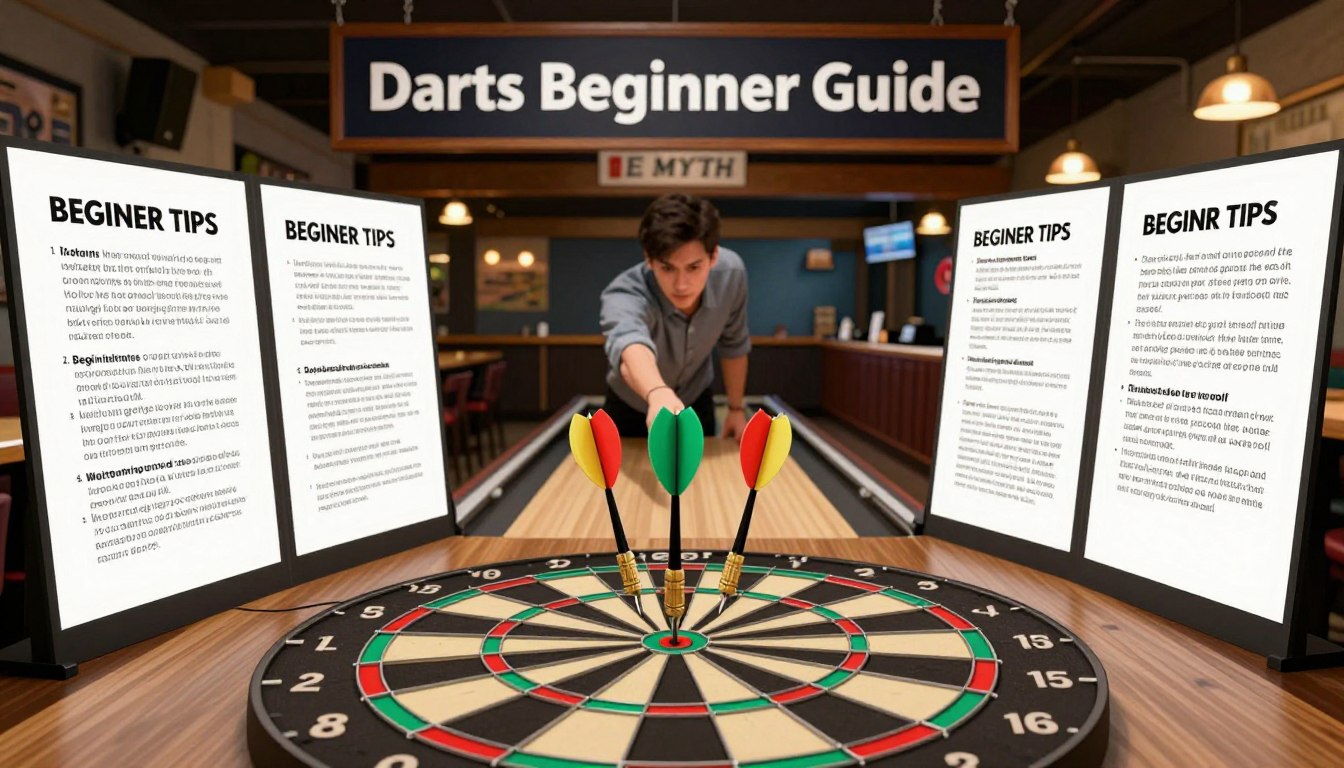
We remember the first night in a small pub when a friend dared us to try the board. The lights were low, the crowd cheered, and one nervous throw turned into a grinning moment that changed everything.
At DARTSLIVE Co., Ltd., we built resources that help new players find the right path in this sport. Our approach pairs practical drills with pro-level tips so you improve accuracy and learn how each number on the board matters.
This short introduction sets the scene: fundamentals, ten essential tips, and steady practice make the difference. We’ll walk with you, explain the mechanics of grip and stance, and show a clear way to make your throws more consistent.
Key Takeaways
- We provide a practical roadmap for new players to learn core mechanics.
- Mastering ten essential tips is the fastest way to boost accuracy on the dartboard.
- Consistent practice is the primary factor in skill development.
- Every number on the board presents a unique strategic challenge.
- Our material blends pro insight with accessible drills for all players.
Essential Equipment for Every Player
We know that solid gear speeds progress. The equipment you choose sets the foundation for every session and match.
Choosing the Right Dart
Picking the correct dart weight and barrel shape matters for your personal style. A heavier weight can steady a slow release; a lighter one helps faster, flicking throws.
We recommend experimenting with several weights and barrel styles until the feel matches your grip and motion. That process builds a durable set that supports long-term improvement.
Understanding Flights and Shafts
Flights and shafts control stability and drag. Small changes to length or material can alter trajectory and grouping on the dartboards.
High-quality flights and shafts reduce wobble and improve consistency. Make sure you test combinations to find the best match for your throwing style.
- Every player prefers different weight and barrel shape.
- Try multiple options to align gear with your grip and release.
- Flights and shafts are essential for stabilizing flight paths.
- Choose durable components so your equipment performs consistently.
Mastering the Darts Beginner Guide Fundamentals
Start with the essentials: posture, aim, and a steady routine build the backbone of every strong player. We focus on clear, repeatable steps so new players and beginners gain fast confidence.
Mastering the basics of the game gives you everything need to move to advanced play. Spend time on a standard dartboard setup and make each session count.
- Control the basics: stance, grip, and a consistent release create reliable results.
- Work big targets first: many beginners find success by focusing on larger segments before tighter games.
- Practice with purpose: short, focused reps build the muscle memory and match experience you need.
These professional tips form compact, actionable content that guides your practice. We provide a framework so you develop solid habits and steady progress.
Perfecting Your Stance and Grip
A reliable stance and a confident hold set the stage for every accurate throw. We focus on posture and hand placement so you gain stability and repeatability at the dartboard.
Finding Your Ideal Stance
Finding your ideal stance is the first step for players who want to improve accuracy and stability. Stand with feet shoulder-width apart and shift weight slightly to your front leg.
A consistent stance keeps weight balanced. That balance is vital for a smooth, controlled throwing motion.
Exploring Grip Styles
How you hold dart affects release and aim. The three main grip styles are the pencil grip, the fingertip grip, and the palm grip.
We recommend you try each option to see which style feels natural. Your grip should offer comfort and control so you can throw with confidence every match.
- Tip: Learning how to hold dart correctly is one of the most important tips for beginner players.
- Adjust stance and grip to find balance, precision, and consistency.
| Grip Style | Feel | Control | Best For |
|---|---|---|---|
| Pencil Grip | Light, precise | High | Targeting tight segments |
| Fingertip Grip | Balanced | Stable | All-around play |
| Palm Grip | Secure, heavier feel | Lower for fast throws | Players using more weight |
Developing a Consistent Throwing Motion
A steady throwing rhythm separates casual players from the ones who score consistently. We focus on repeatable motion so every session trains useful habits.
The Importance of the Follow Through
A proper follow-through keeps trajectory smooth and prevents wobble. When you throw, make sure your arm extends naturally toward the target.
“A fluid finish tells you the mechanics were right — the dart leaves clean and flies true.”
Key points to practice:
- Developing a consistent throwing motion requires time and patience; it is essential for high accuracy.
- Hold dart firmly but comfortably so your release stays fluid and relaxed.
- Extend your arm and maintain the follow-through so the three darts travel along the same line to the dartboard.
- Adjust weight and stance through steady reps to match different dartboards and match pressure.

Practice short, focused sessions and record progress. These tips build control, tighten your grip, and improve your overall game.
Understanding Game Rules and Scoring
When you understand scoring, every target choice becomes a strategic move.
The core objective in many standard games is to reduce your score to exactly 0. That rule shapes how you plan throws and which areas of the board you aim for.
Key points to learn:
- Every number on the board has a fixed value; hitting a double or triple multiplies those points.
- Hitting the bullseye or the outer ring can swing a turn fast, so know their values and risks.
- Understanding the rules of the game helps you choose safe outs and finish rounds cleanly.
We recommend you spend time with different games to build experience. Playing varied match types speeds rule retention and improves tactical choices.
Mastering scoring frees you to focus on the target and enjoy more productive, competitive time at the board.
Advanced Practice Techniques for Home
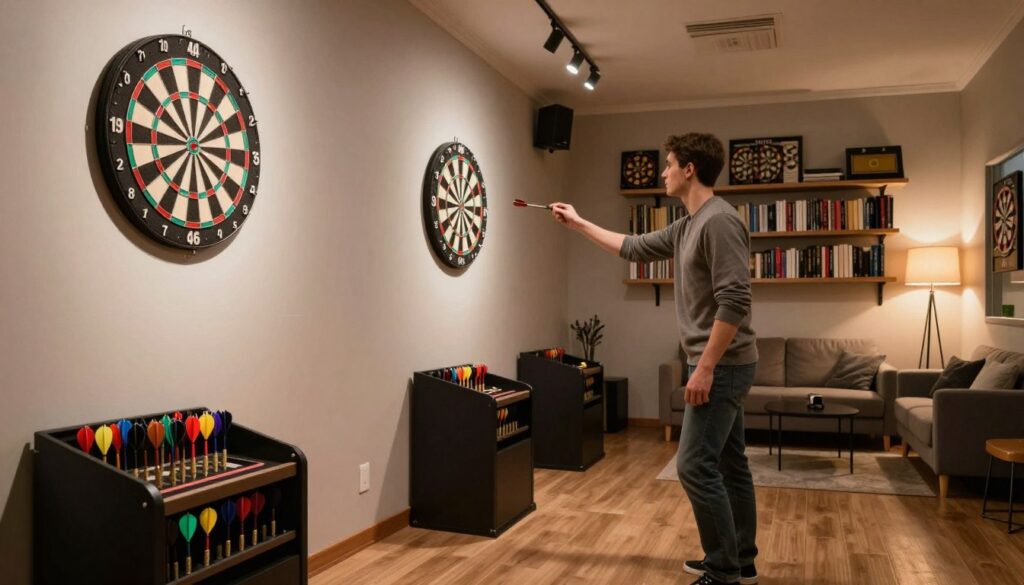
Small, smart drills at home multiply your progress more than long, aimless sessions. We build a compact routine that targets weak spots and keeps every minute productive.
Targeting Specific Board Areas
Use your set darts to focus on one number or zone each session. Aim at the bullseye, the outer ring, and a troublesome triple to refine accuracy.
- Short reps: ten throws per target, then switch.
- Record points: track score to spot trends and adjust weight, flights, or shafts.
Building Muscle Memory
Consistent practice with your three darts locks in stance, grip, and throwing motion. Repeat the same motion in short blocks and rest between sets to keep form sharp.
Playing Against Others
Bring others into your home sessions or join local play to test techniques under pressure. Competing exposes you to different games and helps you adapt strategy and timing.
“Practice with purpose: track score, test equipment, and stay consistent.”
Maintaining a Positive Mental Approach
Keeping calm and focused changes how you handle every throw under pressure. A steady mind improves match results and overall performance.
Even as a beginner, staying positive after a missed shot helps you recover faster at the dartboard. Treat each miss as data, not failure.
We encourage every player to celebrate small wins. That builds confidence and makes competing against others feel less intimidating.
Practical tips:
| Mental Strategy | What to Do | Expected Result |
|---|---|---|
| Reset Routine | Deep breath, visual focus, one clear thought | Faster recovery after a miss |
| Celebrate Small Wins | Note a good grouping or steady release | Improved confidence and consistency |
| Process Over Outcome | Track technique, not just score | Longer-term performance gains |
Remember: this sport is mentally demanding. By focusing on your own progress and using these tips, you make every practice and game a true learning session.
Conclusion
Every practice session is a small promise to improve, one throw at a time.
We built this content so players and beginners find a clear way to raise performance. Focus on stance, grip, and throwing motion — those techniques shape your core skill set.
Learn the rules and how score choices change a turn. Whether you aim for the bullseye or the outer ring, steady practice and smart equipment choices like flights help you improve game results.
Keep refining your set of skills, track progress, and challenge yourself. In time you will gain the experience and confidence to enjoy the game and compete at higher levels.

