

We remember the afternoon when a local player swapped his setup mid-match and suddenly hit three trebles in a row. He told us the change felt small, but the grip and balance were different enough to boost his confidence.
That moment shows how subtle choices shape results. Mastering the core elements — grip, shape, and weight — moves practice into consistency. Every barrel serves as the fingertip contact during release and guides your flight toward the target.
Standard tungsten blanks measure 55mm long and 7.5mm in diameter. By studying those specs, we see why length, diameter, and tungsten percentage matter for balance and feel.
In this guide we break down grip styles, barrel shapes, and the practical choices players make to match hand, release, and board strategy. Whether you’re starting or competing, small tweaks change your experience and percentage on the board.
Key Takeaways
- Grip and shape control how your fingers meet the point at release.
- Length (55mm) and diameter (7.5mm) in tungsten blanks influence balance and feel.
- Weight and tungsten percentage affect stability and flight path.
- Simple swaps can improve consistency and scoring percentage.
- We focus on practical tips you can test quickly in practice.
Why Dart Barrel Design Matters for Your Game
A barrel’s contour is the first thing your hand feels and it often dictates your throw before you even aim.
We know small changes in shape shift how your fingers locate the grip zone. That spot guides your release and helps repeat the same motion, so your percentage on the board climbs with practice.
Grip style and weight distribution work together. A front-weighted option suits a fast follow-through. A rear-weighted option stabilizes a slow, steady release. Choosing the right combination matches your hand and follow-through.
- Defined grip areas force consistent finger placement.
- Subtle shape shifts change how the point tracks to the target.
- Balance and length tune flight stability for tighter groupings.
| Feature | Effect on Feel | When to Choose |
|---|---|---|
| Straight profile | Neutral grip, predictable release | Players seeking consistency and simple alignment |
| Tapered front | Forward weight, quicker nose tracking | Players with fast follow-through aiming at tight trebles |
| Rear-heavy | Stable, slower arc | Players who prefer controlled throws and deeper grouping |
Understanding the Physics of Barrel Weight and Balance
Mass placement inside the tube controls how it flies from release to the board.
We study two core factors: weight distribution dynamics and length. Both change the balance point and the feel in your hand.
Weight Distribution Dynamics
Players like Michael van Gerwen prefer a straight barrel for its steady weight spread. That even layout supports a repeatable grip and a predictable release.
Tungsten lets manufacturers keep a slim diameter while packing mass where it counts. Front-heavy options push the nose sooner. Rear-biased tubes slow the arc and add stability.
The Role of Barrel Length
Increase length and the balance shifts. That alters how your fingers meet the grip area and where the point tracks during flight.
Make your choice by matching options to your follow-through: short, front-weighted types tighten the trajectory; neutral, longer types reward a pure release.
| Factor | Effect | Best For |
|---|---|---|
| Even weight (straight) | Predictable feel, stable release | Consistent players seeking repeatability |
| Front-weighted | Direct nose tracking, quicker flight | Fast follow-through styles aiming at trebles |
| Rear-weighted | Slower arc, deeper grouping | Controlled throws and tight clusters |
Exploring Common Barrel Shapes and Profiles
Profiles shape the fingertip contact and can make the same throw feel totally different. We break down the common options so you can match shape to your style fast.
Straight and slim profiles keep a uniform diameter that lets players move their grip along the length. That freedom helps you test where the point tracks best without a forced stop. Straight barrel types suit players who chase repeatability and a neutral feel.
Straight and Slim Barrels
These give a predictable balance and allow varied grips. They work well with tungsten or brass weight choices and fit many hand sizes.
Torpedo and Teardrop Profiles
Torpedo profiles are front-weighted to pull your fingers forward and favor a direct release. Teardrop blends that forward bias with a rounder midsection for comfort and steady flight.
Bomb and Scalloped Designs
Bomb shapes are compact and heavy-feeling—ideal for players who like a shorter length and strong nose presence.
Scalloped options add a concave waist that locks grips into a repeatable spot, improving consistency throw after throw.
Advanced Grip Textures and Machining Options
Surface engineering is the moment metal meets memory. Small cuts and patterns teach your hand where to sit, and that lesson shows up every time you throw.

Custom machining opens a wide range of textures: shark tooth, hounds tooth, scallops, and micro-grooves. Each profile changes how your fingers contact the point and how the weight feels through your hand.
Customizing Your Grip Surface
Choose textures to match your follow-through and preferred shape. Front or rear bias and tungsten or brass material will change traction and feel.
- Intricate cuts give repeatable contact for tight groupings.
- Grooves and pockets reduce slippage and aid a clean release.
- Test textures over time to find the one that builds confidence.
“The right texture makes you trust your release; confidence follows.”
If you want a bespoke solution, contact manufacturers like Big Bully Darts at bigbullydarts@gmail.com. They can discuss custom specs, machining tolerances, and material choices to match your grip and weight goals.
| Texture | Best For | Effect |
|---|---|---|
| Shark tooth | Players seeking firm lock | High traction, direct feel |
| Micro-groove | Light fingertip contact | Smoother release, subtle control |
| Scallop/pocket | Repeatable hand placement | Consistent alignment, less slip |
How to Identify Your Ideal Barrel Configuration
Begin with a simple hold: relax your hand and note the point where your grip feels automatic and steady.
Observe your fingers during a warm-up. Watch where they land on a standard dart. That natural zone often shows the best match for shape and length.
Players with longer fingers usually prefer a straight profile for versatility. Compact options like the bomb suit shorter grips and firm fingertip control.
- Test front-weighted and neutral options to match your throwing arc and follow-through.
- Measure from the point to your grip zone; that distance narrows suitable shapes.
- Try torpedo and straight types to feel which aligns your release and hand motion.
| Grip Type | Best For | Why |
|---|---|---|
| Front grip | Fast release | Helps nose tracking and direct throws |
| Center grip | Balanced players | Neutral feel, steady balance |
| Rear grip | Controlled arc | Extra stability for slower releases |
Remember: your ideal setup will change as your technique improves. We test, you adapt, and together we find what fits your hand and balance.
Practical Tips for Testing New Dart Barrels
We treat testing as a series of short experiments. Keep sessions focused, change one variable at a time, and record results. This makes it simple to spot what truly helps your accuracy and confidence.
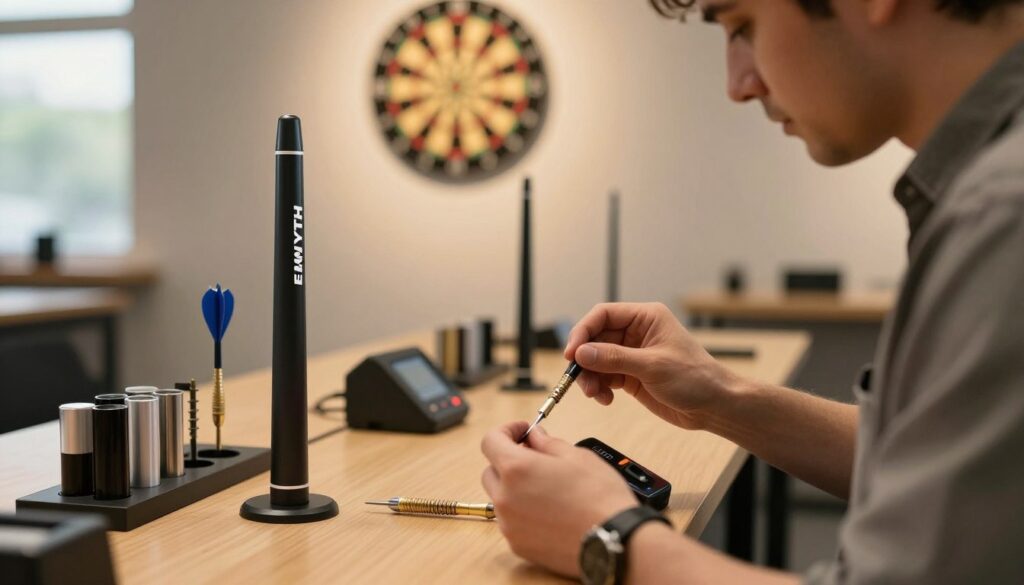
The Pencil Test Method
The pencil test is the fastest way to find your natural grip zone. Hold a pencil as you would a throw and note where your fingers settle.
That spot suggests the ideal grip position on a new tube. If fingers slide forward or back, try a different shape or a scalloped texture to lock placement.
Evaluating Flight Stability
Use short practice games to judge stability. We recommend Bob’s 27 to test doubles and the Treble 20 Challenge for tight groupings.
- Throw consistent sets of three and record where the point lands.
- Pay attention to feel at release; mismatched grip and shape causes wobble.
- Rotate tests across lengths and weight options, including tungsten samples.
“Treat every session like lab work: small changes, clear metrics, repeat.”
Final tip: test over several days. Players adapt quickly; true winners choose the setup that feels stable across routines and environments.
Conclusion
Finding the setup that feels like an extension of your hand is the final step in leveling up your game. Choose a barrel that matches your natural grip and lets you trust the release.
We covered how shapes — from straight to torpedo — change feel and aim. Match weight and tungsten content to your arc and follow-through, and test a front-biased option if your throw tracks forward.
Experiment with textures and small weight shifts. Keep tests short, change one variable at a time, and note how your grip adapts across days.
When you find the right combo, practice becomes confident work. Use these tips, keep testing, and watch your darts group tighter as your game rises.

