

Wir still remember the day a dusty box arrived at our workshop on Belmont Avenue. Inside was the Professional Model wooden set made by Innovation Products at 1113 Belmont Ave., Chicago. That hand-finished kit felt like a bridge between craft and competition.
From that moment we began tracing how design choices and packaging shaped player experience. Early wooden gear and careful boxes taught manufacturers what hitters and pros truly needed.
In this short guide we map the shift from basic components to refined modern gear. You will see how one company’s early products influenced standards and how those lessons still guide us today.
Die wichtigsten Erkenntnisse
- We highlight the role of the Professional Model wooden set from Innovation Products in Chicago.
- Packaging and design evolved to improve handling and longevity.
- Early product choices set patterns for modern performance gear.
- Historical design still informs pro-level equipment decisions.
- We aim to give practical insights you can apply today.
Understanding the Evolution of Darts Innovation
The journey from neighborhood pub play to global competition maps a clear arc of technical progress and cultural growth.
We trace shifts in materials, manufacturing, and design that lifted the game from casual to professional. Early sets used wood and simple points. Over time, makers adopted higher-density metals and tighter tolerances to improve balance and flight.
Understanding this history helps you see why top players choose certain gear. Precision-machined barrels and high-density tungsten alloys deliver a smaller profile and better grouping. These choices reduce drift and boost scoring consistency.
Key changes across decades include improved metallurgy, CNC manufacturing, and refined ergonomics. Each step focused on repeatable performance for athletes who compete internationally every year.
Studying these developments deepens your connection to the sport and clarifies why design matters in practice and competition. We recommend paying attention to materials and feel when you evaluate equipment.
- Materials: wood → tungsten alloys
- Manufacture: handcrafted → CNC precision
- Performance: casual play → pro-grade consistency
Lessons from Vintage Equipment Design
Vintage kits often hide clever fixes that still shape how we pick gear today. Small choices in packaging and hardware taught lessons about protection, balance, and user confidence.
The Role of Packaging and Marketing
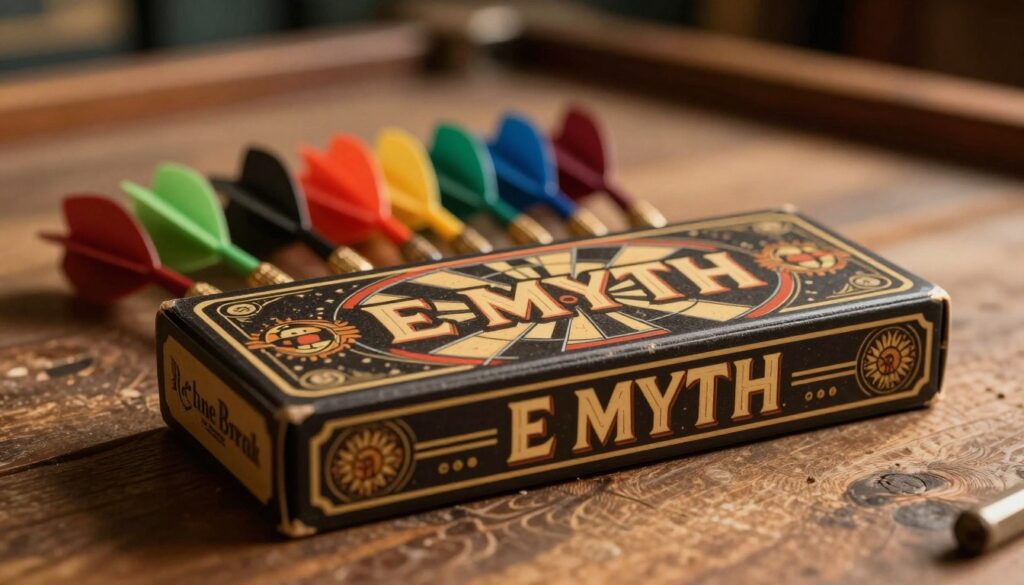
Packaging mattered. The Professional Model used a cardboard container with separate slots for each piece. This kept items protected and presented them like premium products.
Marketing pushed claims of precision. Ads for the V Dart said it was scientifically weighted and balanced for expert play. That language framed expectations for accuracy and durability.
Analyzing Unique Barrel and Point Features
The V Dart replaced lead weights with a wooden cap, giving a different look and feel during play. A tiny needle point aimed to extend board life, though players still debate its trade-offs.
Plastic flights added color and a new way to protect trajectory. These parts reveal early attempts to solve flight durability and barrel balance.
“Small manufacturing choices can change a player’s confidence and consistency.”
| Funktion | Vintage Approach | Player Benefit |
|---|---|---|
| Packaging | Cardboard slots per piece | Better protection; premium presentation |
| Weighting | Wooden cap instead of lead | Different feel; lighter nose balance |
| Point | Tiny needle tip | Board life extension; debated accuracy |
| Flug | Early plastic flights | Colorful look; varied durability |
By studying these choices we understand how early makers tried to solve real problems. That history guides product selection and design thinking for players and makers today.
The Shift Toward Modern Materials
As materials science advanced, the tools of the trade shifted from wood to engineered metals and polymers.
The change unlocked aerodynamic flight shapes that reduce drag and stabilize trajectory. Manufacturers used new polymers to craft slimmer, more consistent forms that players trust in competition.
The barrel design moved decisively toward tungsten alloys. Tungsten’s high density lets makers produce a thinner profile while keeping mass, which improves grouping and scoring potential.
Modern manufacturing brings consistent weight and balance tolerances. CNC machining and strict quality control mean each piece meets exact specs, something wooden models rarely achieved.
The move to durable plastic and nylon for the flight improved lifespan and resilience. These materials keep shape longer and survive repeated impacts better than feathered alternatives.
Today you can pick from a wide range of materials and profiles to match your style. We recommend testing barrel feel and flight shape to find the set that suits your grip and release.
“Precision in material choice translates directly into consistency on the oche.”
- Materials: tungsten, alloys, polymers
- Benefits: slimmer barrels, stable flights, repeatable balance
- Advice: match material to your throwing profile
Integrating Technology into the Game
Connected gear has rewritten how we practice and compete from our living rooms to league nights.
The Rise of IoT Devices
IoT technology now links sensors, cameras, and apps for a seamless at-home experience.
Target Darts’ Virt Camera is a two-way system that pairs with smart boards and apps.
High Definition Video Streaming
The Virt Camera enables HD video streaming for real-time matches and coaching.
Streaming two live feeds required compact hardware and precise software sync to meet performance demands.
Real Time Scoring Systems
The DartCounter app, available on IOS and Android, tracks scores and stats live.
These tools overcame significant technical challenges to deliver smooth, instant feedback.
“Connected systems make training measurable and match play more social.”
- Visit the official Target Darts website to learn setup and compatibility.
- Players say this tech changed their life, making it easier to compete worldwide.
Overcoming Engineering Challenges in Product Development
When space is limited, the real design work arrives in the details—component choice, thermal paths, and assembly flow.
Design for Manufacture Principles
We worked with Cubik to run a focused design review that balanced performance with supply realities. This review helped simplify assemblies and reduce costly rework.
The Virt Camera required tight tolerances and careful part selection. Our team researched sensor modules, lenses, and boards to meet the expectations of pro players.
- Partnership: Target Darts + Cubik addressed miniaturization challenges early.
- Method: Design for manufacture cut assembly time and improved yields.
- Validation: CE, UKCA, and FCC approvals proved the hardware met global safety and performance rules.
“Rigorous engineering steps turn prototype ideas into reliable products that perform under pressure.”
These practices ensure every dart accessory and connected product you buy is durable, certified, and ready for competitive use.
Professional Tips for Selecting Modern Gear
A smart purchase begins by matching barrel feel to your natural grip and follow-through.
We advise testing weight distribution and surface texture first. A barrel that fits your hand reduces grip adjustments and improves release consistency.
Balance matters. Choose sets with a centered mass for stable flight or a front-weighted design if you favor a dart with a sharper nose angle.
Top pros like Luke Littler and Rob Cross rely on high-quality equipment to sustain extreme accuracy. Follow their lead: try different point lengths and flight shapes to see how trajectory and landing angle change.
Invest in modern, well-engineered gear. Good design pays off in repeatable results and faster progress.

| Funktion | Warum das wichtig ist | Pro tip | Quick check |
|---|---|---|---|
| Lauf | Grip and comfort | Test 20 throws in practice | Consistent grouping |
| Balance | Flight stability | Try center vs front mass | Smoother release |
| Point length | Board penetration & bounce-outs | Compare short and long points | Lower bounce rate |
| Flight shape | Trajectory control | Switch shapes for arc change | Desired landing angle |
Enhancing Your Gameplay with Connected Devices
Two-way video and real-time stats turn casual throws into counted competition. The Virt Camera pairs a front-facing feed with live scoring to create a true match atmosphere.
Why it matters: this technology lets you face opponents worldwide while they watch your release and landing in HD. The result is pressure that mirrors tournament play and quick, actionable feedback.
- Engage with a global community and get instant performance feedback during live matches.
- Use the system in practice to simulate competition and sharpen mental focus.
- Track throws with detailed stats to refine release, aim, and arc over time.
Visit the Target Darts website to see compatible gear and setup guides. Integrating connected devices into routine practice helps you develop consistency and prepares you for real events.
“Connected play closes the gap between solo practice and the heat of competition.”
Fazit
This conclusion pulls together history, tech, and pro practice to leave you with clear next steps. By tracing design choices and modern tools, we show a practical way to choose gear that fits your style and goals.
Understand how vintage design lessons and current manufacturing affect feel and balance. Use that insight when selecting Darts and accessories so you spend less time guessing and more time improving.
Stay curious about material shifts, connected systems, and product development. Apply what you learn in practice today, and you will elevate results faster. Thank you for following this journey through product history, performance, and thoughtful innovation.

