

We remember the night a club rookie hit the treble 20 on his first game after five focused sessions. He smiled, but we all felt it: small habits make big gains. That moment became proof that a smart routine changes a player’s arc faster than luck.
At GoDartsPro we pair that feeling with data. With 91,000+ members and 357M+ throws tracked, our platform offers 120+ training games that turn repetition into measurable improvement.
We believe consistent training is the foundation for anyone who wants to elevate their skill. Every throw at the board is a chance to refine your technique, boost scoring accuracy, or dial in a doubles finish during a tight match.
Join us and build a routine that fits your time and goals. We guide you with clear drills, targeted games, and community support so you can grow steadily and play with confidence.
Key Takeaways
- Structured routines turn effort into consistent results.
- Data-backed training helps refine technique and accuracy.
- 120+ games on GoDartsPro target specific skills like treble and doubles.
- Small, focused sessions fit your time and speed up progress.
- Community support and tracked throws create lasting improvement.
Establishing an Effective Darts Practice Routine
A focused routine turns scattered hours at the board into measurable gains. We design sessions so each minute counts and skills improve steadily.
The Importance of Structured Sessions
Treat every session like a match. Set a target number of legs and record results. This keeps progress visible and goals realistic.
Keep drills varied. Rotate trebles, bull, doubles and finishing legs to make each session competitive. Play friends or virtual opponents to simulate match pressure.
Managing Practice Time and Breaks
We recommend the Pomodoro method: 20 minutes intense throwing, 5 minutes rest. Short bursts keep the mind sharp and limit arm fatigue.
Stretch your wrist and hand between sets. Experts advise gentle mobility moves to prevent soreness and sustain longer sessions.
| Routine Element | Duration | Focus |
|---|---|---|
| Warm-up | 5 minutes | Grip & alignment |
| Main session | 20 minutes | Scoring, trebles, doubles |
| Short break | 5 minutes | Stretch & reset |
| Match simulation | 15 minutes | Legs & finishing |
Mastering High Scoring Techniques
High scoring separates contenders from the rest; set a clear target every time you step up to the board.
We recommend you assign a point target for each turn. Aim for a specific number, like 60+, to mimic match pressure and sharpen focus.
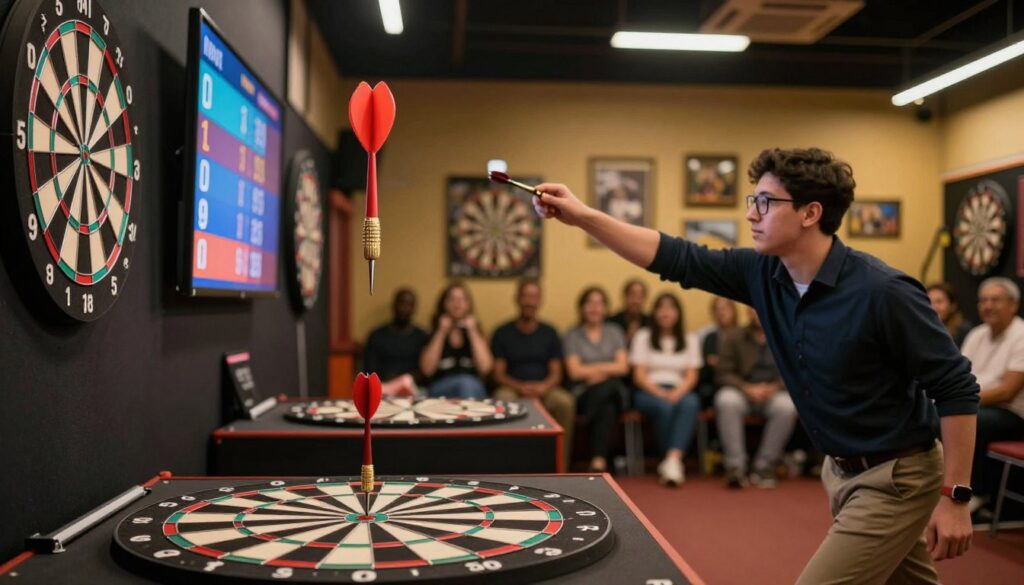
Every player should dedicate time to hitting trebles consistently. The treble is the fastest route to winning a leg in 501.
Track your scores over weeks so you can spot weak checkout routes. Recording routines lets you see progress and fixes where a checkout is failing.
| Focus | Goal | Session Time |
|---|---|---|
| Scoring bursts | 60+ per visit | 10 minutes |
| Trebles work | Hit 30 trebles | 15 minutes |
| Checkout drills | Practice doubles & combos | 10 minutes |
Make a simple log. Note scores, checkout success, and time spent. We use that data to refine training and turn good routines into consistent scoring machines.
Improving Accuracy and Grouping
Accuracy grows when we train focus, not just volume. Targeted work tightens your grouping and builds confidence under pressure. Use tech and small goals to make each session count.
Using Visual Targets for Focus
Place a small marker—like a matchstick—on a precise area to force aim and hand control. This simple target sharpens eye-to-hand timing and improves grouping fast.
Try timed rounds: in a 20-minute session aim at the bull or specific trebles. Count how many hits you get in set minutes to track progress.
Rotating the Board to Prevent Wear
Rotate the board regularly so no single area gets hammered. This preserves the surface and keeps scoring consistent across sessions.
Tip: mark rotation dates in your log. Even small shifts extend board life and keep target areas true.
Advanced Hand‑Eye Coordination Drills
Use Scolia autoscoring to log every throw without interrupting flow. Data from real sessions shows faster gains when feedback is instant.
“Consistency with clear feedback beats raw volume every time.”
Challenge friends with short game sets. Competing for the highest number of hits in fixed minutes makes training feel like match play and sharpens technique.
| Focus | Drill | Duration |
|---|---|---|
| Visual target | Matchstick on treble 20 | 10 minutes |
| Rotation | Rotate board 90° weekly | 1 minute |
| Coordination | Scolia autoscoring rounds | 20 minutes |
Developing Confidence in Checkouts and Doubles
Nailing doubles starts with a repeatable routine you trust when the score tightens. We focus on low‑stress drills that target the final throw and build mental strength for match moments.

The Twenty-Seven Game Method
The 27 game gives you a clear rule set: start at 27 points and lose the value of a double if you miss three darts in a turn. This forces focus on finishing, not just scoring.
Do this every day. Short sessions train the brain to handle pressure and make the checkout routine habitual. Pick a target number on the board and repeat until your hands and mind sync.
- Developing confidence in your doubles is the most important factor in winning a game—finish every leg with precision.
- Use the 27 method in 10–15 minute slots to simulate match time.
- Track points and success rate so training and routines become measurable growth.
Master the checkout and you win more matches. Focused training on doubles turns tight moments into routine outcomes.
Preparing for Competitive Match Play
Getting match-ready means tuning both your arm and your head for the pressure ahead.
Follow the pros. John Lowe advises a calm routine and mental focus before a big game.
We recommend arriving early at the pub or venue. Use that time to warm the arm, check the board, and get a feel for the lighting and sound.
Have a simple ritual: three scoring throws, a couple of trebles, then a few doubles. That sequence helps you finish a leg in under 24 darts when it counts.
Play with friends who push you. Facing slightly better players raises the intensity and sharpens technique under real pressure.
“Preparation is more than muscle memory; it’s control under heat.”
| Pre‑match Step | Duration | Why it helps |
|---|---|---|
| Arrive early | 10–15 minutes | Assess board, light, and angle |
| Warm segment | 5–10 minutes | Loosen hand and aim with trebles |
| Finish routine | 5 minutes | Hit doubles to lock finishing |
| Short competitive set | 10 minutes | Simulate match pressure and track scores |
Track a few minutes of scoring before you play. Seeing numbers in real time builds confidence and highlights any accuracy gaps to fix.
Conclusion
Closing a session with intent makes your next match feel easier and more controlled. Set one clear target each time and measure the result so progress stacks over weeks.
We explored how structured drills and games sharpen scoring and improve accuracy. Keep a simple log of checkouts, scores, and the number of trebles you hit to track gains.
Use focused training on the board, tune your technique, and build doubles confidence. If you stay consistent, each game will bring better matches and steadier results.
Thanks for joining us — now go hit that next treble with focus and purpose.

