
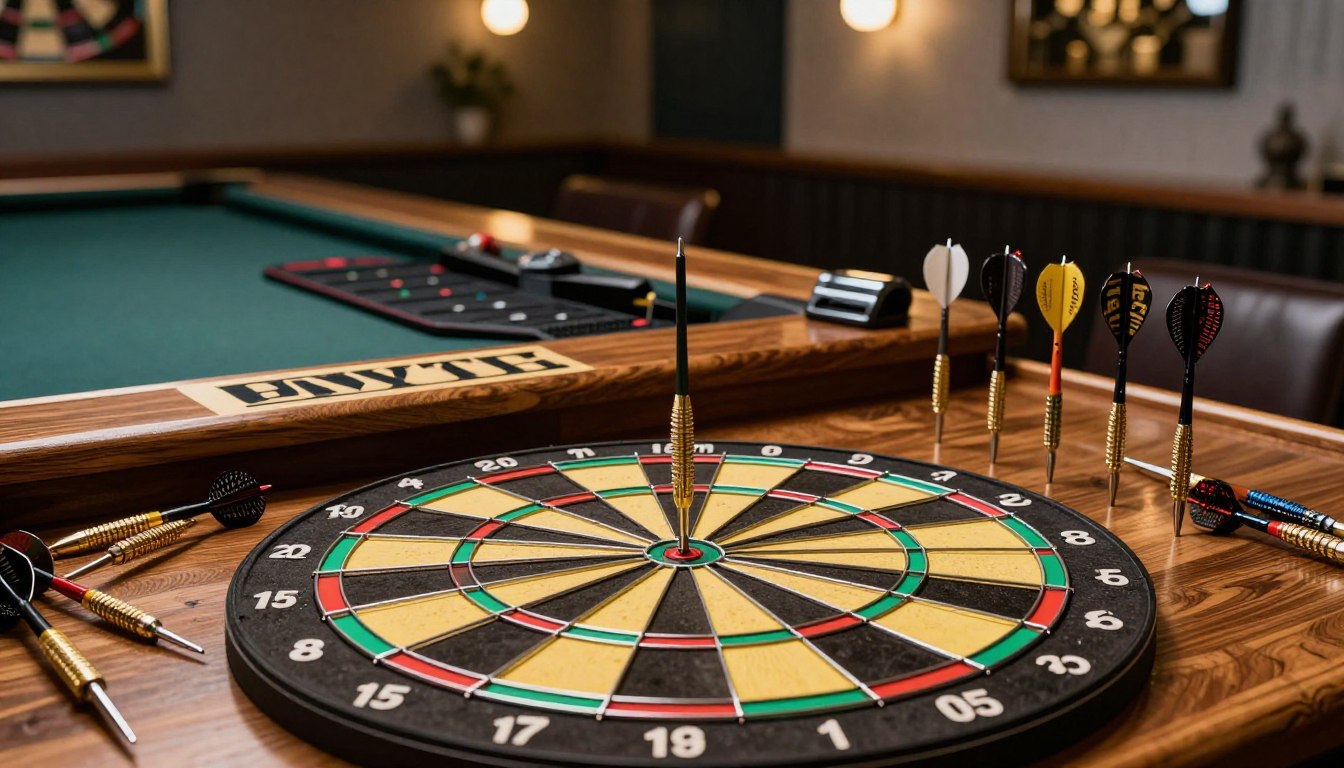
We remember the night a friend switched his old throws for a precision kit and, within weeks, his scores jumped. That change felt like a small revolution. It showed how the right gear can reshape a player’s focus and game.
On this page we spotlight 111 options from DICK’S Sporting Goods and the 98 types of darts they carry. Our aim is clear: help you find perfect equipment that matches your style and goals.
Choosing a quality dart set means weighing materials, balance, and flight design. We cover barrel composition, grip profiles, and why shipping matters when ordering online. Whether you’re chasing tournament wins or steady improvement, thoughtful choices pay off.
Key Takeaways
- We review 111 products and 98 darts to help players pick the right option.
- Material and balance are critical for long-term quality and consistency.
- Our content walks you through technical features and practical buying tips.
- Shipping options can affect delivery and setup—consider them before purchase.
- Both beginners and experienced players can improve with the right dart sets.
Understanding the Anatomy of a Professional Dart Set
Every winning throw starts with parts that fit together precisely. We break down the core components so you know what drives consistency on the oche.
Barrel Composition
The barrel is the heart of the instrument. Its metal, machining, and groove pattern dictate weight, feel, and grip.
Tungsten blends, brass alloys, and nickel-silver variants are common. We look for tight tolerances and even weight distribution to aid repeatable release.
Component Integration
Points, barrels, shafts, and flights must join without play. Misalignment steals accuracy and shortens part life.
- Precision machining: ensures barrels meet spec and balance correctly.
- Seamless joins: reduce vibration and preserve trajectory.
- Rigorous testing: confirms how barrels and components perform under match conditions.
When we evaluate a professional dart set, we prioritize material quality and fit. That focus explains why elite players notice immediate gains once parts align.
Why Material Matters for Your Throw
Material choice changes feel, flight, and the tiny margins that win matches.
We focus on how metal selection affects balance, profile, and repeatability. The right material moves your center of gravity and alters each throw.
Tungsten vs Brass Performance
Tungsten steel delivers high density. That lets manufacturers create thinner barrels without losing weight. Thinner barrels improve grouping and make tight targets far easier to hit.
Brass darts cost less and suit beginners. They are bulkier at the same weight and change how the barrel packs into a group.
- Tungsten steel: slim profile, better durability, tighter grouping.
- Brass: affordable, forgiving for new players, larger diameter.
- Material impact: affects center of gravity, feel, and aerodynamic stability.
| Property | Tungsten Steel | Brass |
|---|---|---|
| Density | High | Low |
| Profile | Slim | Thicker |
| Durability | Superior | Moderate |
| Best for | Serious players, tight grouping | Beginners, casual play |
In short, choose tungsten when you want precision and longevity. Start with brass if budget matters, then upgrade as your throws tighten.
Selecting the Ideal Weight for Your Playing Style
Weight shapes how your throw feels and how consistent your groups land. We offer a wide variety of choices from 14g to 25g so you can match equipment to strength and rhythm.
Our inventory shows common options: 14g (1), 16g (5), 18g (9), 19g (2), 20g (3), 21g (7), 22g (2), 23g (3), 24g (3), 25g (2). The 18g weight is the most popular among the 111 products we review.
Tungsten steel choices let you carry heavier mass in a slimmer barrel. That means tighter groups and cleaner passes through crowded boards. Many competitive players pick 21g or 23g tungsten options for that balance.
- Light weights favor speed and quick release.
- Heavier tungsten barrels boost stability and a straighter trajectory.
- We categorize weight darts so you can test matched options by feel.
Try small steps when changing weight. Experimenting across our weights helps you find the best match for your style and improves consistency over time.
The Difference Between Steel Tip and Soft Tip Darts
Choosing the right tip and board combination changes how every throw behaves. We break the choices down so you can match equipment to your playing style quickly.
Steel Tip Considerations
Steel tip darts are built for sisal boards and tournament rules. They deliver the classic feel and tight grouping many competitors demand.
Keep the point sharp. A blunt tip slips or bounces, so regular maintenance preserves accuracy and board life.
Soft Tip Versatility
Soft tip darts work with electronic boards and automated scoring. They are safer at home and common in league play that uses plastic segments.
- Soft tip offers easier cleanup and reduced board repair.
- Tip design changes aerodynamics, so you may need to tweak release and aim.
- Many players own both types to adapt to different local rules and venues.
We recommend testing both styles on your home board. That gives a direct feel for how tip type affects trajectory, grouping, and long-term progress.
Evaluating Barrel Grip and Texture
Barrel texture is a silent coach: it tells your hand when to hold tight and when to let go. We evaluate grips from smooth finishes to aggressive knurling so you can match feel to release.

Grip influences every throw. A consistent hold on the barrel keeps release stable and repeatable. Test both low-friction and high-friction surfaces to find what suits your motion.
We sort options by color—black, blue, and gray—so appearance and coating clues guide selection. Still, prioritize grip over color; tactile feedback beats visual style when scoring matters.
“Many players choose a texture that prevents slipping without blocking a clean release.”
- Try multiple barrel designs to locate natural hand placement.
- Look for coatings that balance traction and smoothness.
- Choose a grip that builds confidence under pressure.
In short, test textures in real throws. The right grip turns practice into consistent performance, and that progress is what we aim to deliver together.
The Role of Flights and Shafts in Aerodynamics
The tail of the dart—the flights and shafts—does most of the hidden steering for your throw. These parts stabilize the body and keep shots true as they fly toward the board.
Vols change drag and lift. Different shapes let you tune how much the dart resists or slices through air.
- Flights and shafts stabilize the dart so it maintains a straight trajectory.
- Various shapes of flights alter drag and lift for better control.
- High-quality flights shafts preserve balance for the whole flight path.
Shaft length shifts the center of gravity. Short shafts pull mass forward for a tighter grouping. Long shafts move balance rearward, which can smooth an arcing release.
Choose flights and shafts to tweak performance without replacing your whole dart. Proper alignment prevents wobble and reduces deflection from nearby hits.
“Experimenting with combinations of flights and shafts is one of the fastest ways to gain consistent control.”
We recommend testing a few combos during practice. Small changes in flights, shafts, and shapes can unlock big improvements in accuracy and repeatability.
Choosing the Right Professional Dart Set for Your Skill Level
Match your gear to your skill, not the label on the box. We guide players through a clear path so you can find perfect equipment that grows with your game.
For beginners, prioritize stability and forgiving balance. Look for a heavier front profile and smoother grip to build consistent release and confidence.
Intermediate players benefit from medium-weight options and varied flight shapes. Those transitioning to competition can test more aggressive textures to sharpen control.
Advanced players often prefer slim barrels and distinct grip patterns that lock hand placement and reduce wobble.
We offer a wide variety of options and practical advice so every player can choose a set that matches style and budget. Our experts sort the 111 listed products to help you narrow choices fast.
- Stability first for newcomers.
- Balanced options for steady improvement.
- Aggressive textures for refined control.
Investing in the right equipment boosts your confidence and lets you focus on technique. We’re here to help you select the best darts and set for long-term progress.
Comparing Top Brands in the Industry
Top brands bring different engineering philosophies that shape every toss and outcome.
We feature heavy hitters like Viper and WINMAU on this page, offering a wide range of options across price and performance. Elkadart and Nodor appear for their reliable machining and consistent feel, while Accudart and Unicorn push materials and finish innovations.
Red Dragon carries a legendary reputation for precision and repeatability. We explain why its engineering earns trust from high-level players and clubs.
Fat Cat and Popdarts round out the roster with alternatives that focus on value and niche designs. When you buy from our page you also gain competitive shipping options and clear product comparisons.
- Viper & WINMAU: broad selection and proven consistency.
- Red Dragon & Elkadart: craftsmanship and tournament-grade choice.
- Nodor, Accudart, Unicorn: technical innovation and refined finishes.
- Fat Cat & Popdarts: accessible builds for varied budgets.
Our goal is to help you compare dart sets so you find maximum value and performance for your game.
How to Properly Maintain Your Equipment
Keeping gear in top shape protects your aim and extends playing life.
We inspect your darts regularly for dull points, bent shafts, and torn flights. Catching wear early prevents score drift.
Clean barrel surfaces after each session with a soft cloth. This removes oils and debris that change grip feel during tight matches.
Replace worn shafts and flights promptly. A fresh shaft restores balance and keeps the dart flying straight. Store your kit in a padded case to shield points and preserve quality.
“Small, consistent care keeps performance steady and saves money over time.”
| Action | When | Benefit |
|---|---|---|
| Check points & flights | Before play | Reduces bounce-outs, improves accuracy |
| Wipe barrels | After each session | Maintains grip, prevents corrosion |
| Swap shafts/flights | As soon as wear appears | Restores balance and flight path |
| Store in case | Always | Protects points and preserves overall quality |
We offer a short step-by-step care guide so you can treat each dart like an investment. Follow these tips and your favorite set will feel reliable every time you play.
Essential Accessories for Competitive Play
Small tools often make the biggest difference when competition pressure rises.
Keep points sharp: high-quality sharpening stones prolong the life of steel tip darts and cut bounce-outs. A clean point means more hits and fewer misses.
Conversion options let you switch between steel and soft tip play. We stock conversion points so your favorite set adapts to different league rules without replacing barrels.
Protect and transport: invest in a sturdy case to shield steel tips from damage during travel. Reliable shipping ensures accessories arrive before tournaments and practices.
- Keep extra flights and shafts on hand—these break first and change flight dynamics.
- Carry a compact sharpener for quick maintenance between games.
- Choose conversion points to toggle between soft tip and steel tip competition.
We provide a one-stop selection designed to support both steel tip darts and soft tip setups. With the right tools, you stay match-ready and focused on performance.
Navigating Price Points and Value
Budget choices shape practice time and tournament readiness more than most players expect.
We list options across clear ranges: under $25, $25–$50, $50–$100, $100–$150, $150–$250, and up to $500. This helps you match investment to goals quickly.
On this page we group offerings so you can filter by price and find the best value for your level. Under $25 items suit newcomers. Mid-range picks deliver better balance and durability. Premium builds add tight tolerances and superior materials.
Consider total value: manufacturing quality, materials, and testing matter more than sticker cost. Higher prices often buy tighter tolerances and longer life.
“Free shipping on many options adds real value—factor delivery into your final decision.”
- We show which ranges include tungsten versus brass and why that affects long-term cost.
- Use our filters to sort by price and feature so you avoid overspending on unnecessary extras.
- Our comparison guide lays out what you pay for at each level.
Choose a kit that advances your skill without breaking the bank. We believe every player deserves quality, and our listings make that choice simple and clear.
Setting Up Your Home Dartboard Environment
A consistent playing space gives you repeatable angles and reliable results. Build a layout that protects your walls and keeps your equipment performing at peak levels.
Choose a high-quality sisal dartboard. Sisal boards self-heal after impacts and extend the life of your fléchettes à pointe en acier.
Mount the board at the official height of 5 feet 8 inches from the floor to the bull. This alignment creates tournament-standard sightlines and repeatable throws.
Lighting matters. Use bright, even illumination over the board to reduce shadows and help you aim every throw with confidence.
Install a sturdy backboard to catch stray steel tip points and protect drywall. A backboard saves repairs and keeps points sharper longer.
We recommend keeping spare flights and a sharpener near the board. Proper care of tip darts preserves performance and prevents bounce-outs during practice.
“The environment you build at home directly affects how fast you improve.”
- Use a quality sisal dartboard for true feel and durability.
- Mount at 5 ft 8 in for consistent tournament practice.
- Add solid lighting and a protective backboard for safety and upkeep.
Investing in a proper board and layout turns casual sessions into focused training. When your space supports repeated form, your accuracy with any favorite set improves faster.
Improving Your Accuracy with Consistent Practice
Accuracy grows fastest when practice is tight, measurable, and deliberately focused. Commit to at least 30 minutes a day of targeted drills to build muscle memory and repeatable release.
Track every session on a score sheet. Recording results helps you spot patterns in your game and shows where to focus next.
Mix training with both steel tip and soft tip gear to adapt to different match conditions. Many players use both systems so their aim stays sharp across venues.
Focus on three fundamentals: stance, grip, and follow-through. Small, steady adjustments to each will cut scatter and raise scoring consistency.
“Practice with the same set of equipment to learn its quirks and trust your release.”
- Use short routines that isolate aim and release.
- Join local leagues to test skills under pressure.
- Rotate drills weekly to prevent plateaus.
We provide structured routines you can follow. With consistent practice, tracking, and mixed training between steel tip darts and soft tip setups, players reach higher accuracy and more stable results in competition.
Common Mistakes When Buying Darts
Many buyers pick gear by looks and miss the key fit-and-feel details that matter most.
Ignore barrel weight: Choosing a weight that doesn’t match your throw leads to inconsistent groups. Test increments before you buy.
Chase the lowest price: A cheap purchase often means poor materials and fast wear. You pay more over time in replacements.
Mismatch components: Flights and shafts can be incompatible. Check thread types and lengths so parts fit and fly predictably.
Overlook grip texture: A comfortable feel in the shop might be unstable in play. Try real throws before you commit.
Read each product specification on our page. Understand weight, material, and thread compatibility to avoid wasted price and effort.
“Buy with intent: match gear to your style and you keep improving.”
| Common Mistake | What Happens | Quick Fix |
|---|---|---|
| Wrong barrel weight | Inconsistent throws | Test 2–3 weights |
| Lowest price only | Fast wear, more cost later | Compare materials and reviews |
| Incompatible parts | Fit issues and wobble | Check thread/type on page |
| Ignoring grip | Loss of control | Try grips during practice |
Finding the Perfect Balance for Your Grip
Finding the right balance in your grip transforms erratic throws into repeatable scores.

Test different barrel shapes and tungsten densities to see what feels natural in your hand. Try short sessions where you change only one variable—weight, texture, or tip—to isolate the effect.
We help you analyze whether you hold the dart with two fingers or four, and which barrel profile supports that hold. Pay attention to how grip position shifts the center of mass and the flight path.
- Experiment: swap barrels to compare release consistency.
- Compare densities: tungsten options concentrate weight for slimmer barrels and tighter groups.
- Texture matters: a reliable surface reduces slip and keeps aim steady.
| Grip Type | Recommended Barrel | Practical Result |
|---|---|---|
| Two-finger | Slim tungsten barrel | Tighter grouping, forward balance |
| Three-/Four-finger | Mid-profile barrel | Stable hold, forgiving release |
| Heavier grip pressure | Knurled texture barrel | Less slip, consistent tip contact |
“By focusing on feel and small changes, you turn practice into predictable results.”
We offer a wide range of barrel styles so you can fine-tune balance until your throws feel natural and reliable. When grip and weight align, accuracy follows.
Conclusion
This guide wraps up the essentials so you can buy with confidence and play at a higher level. We highlight how a well-chosen professional dart set plus steady practice changes results fast.
Focus on fit, maintenance, and routine practice. Keep your gear clean, replace flights and shafts when needed, and check points before each session to protect your aim and prolong life of the set.
Use our page to compare options by price and feature. We list choices across clear price ranges and offer dependable shipping so gear arrives match-ready.
Thank you for trusting our content. We stand with you through skill gains, gear upgrades, and every competitive moment in your game.

