
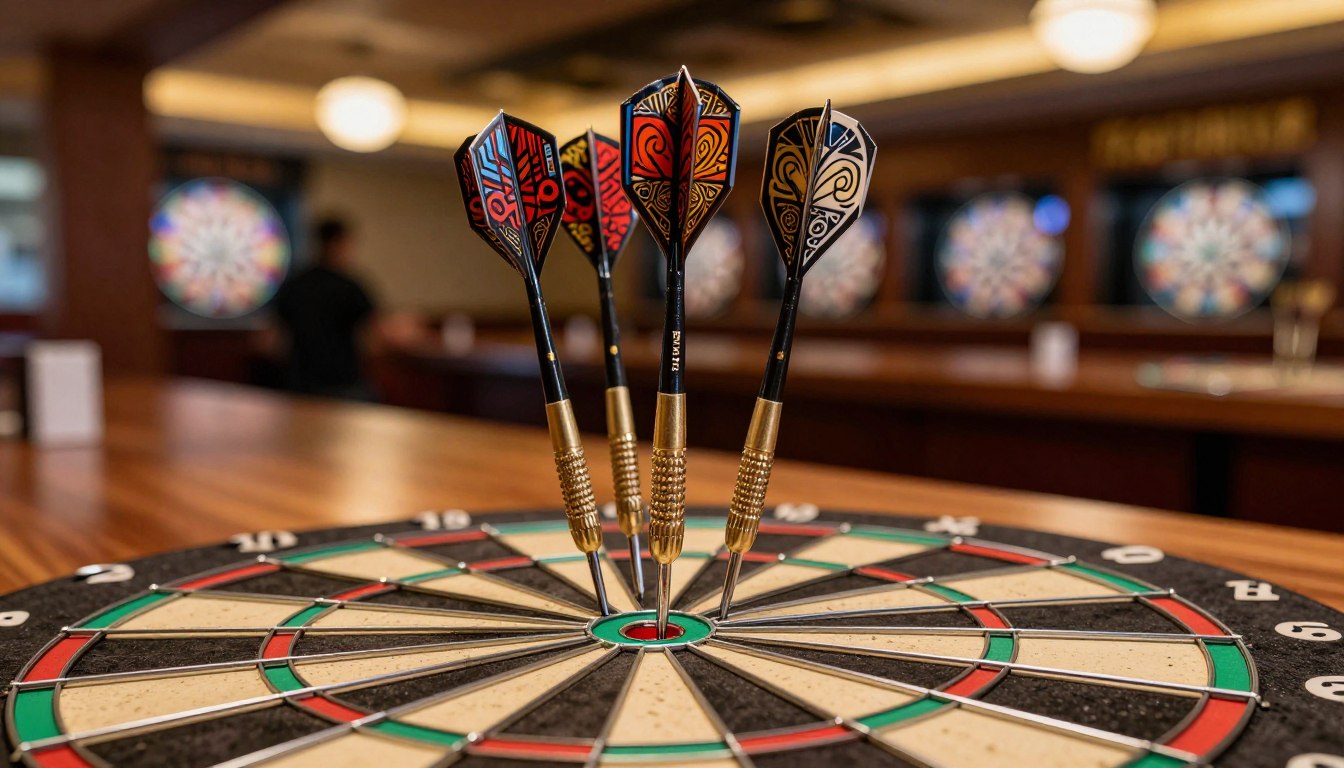
We remember the first time we stood at the oche with a pro model in hand. The room felt smaller, the lights clearer, and every throw carried more intent. That instant showed us how much design, balance, and the right steel tip change the game.
You don’t need pro experience to feel the difference. Choosing the right point profile and weight can lift your accuracy fast. We will walk you through gear choices, explain how price maps to performance, and show which design details match your style.
Explore how manufacturers blend engineering with player input to craft each dart. Our guide breaks down the market, highlights pro-level features, and helps you pick equipment that fits your goals.
Key Takeaways
- Pro models show how engineering improves consistency.
- Steel tip and point shape affect board contact and scoring.
- Price often reflects materials, finish, and brand input.
- Match barrel design to your grip and release for best results.
- We guide you from specs to confident equipment choices.
Understanding the Appeal of Signature Darts
Fans choose player-endorsed gear because it captures the athlete’s feel and tournament-proven design. That emotional link is powerful: holding the same tool as a favorite pro boosts trust and focus.
We believe the real draw comes from meticulous engineering. Pros demand precise weight distribution, tight tolerances, and finishes that stand up in high-pressure matches.
When you pick a pro model, you get gear vetted under tournament conditions. That testing reduces surprises and helps players adapt faster in competition.
- Unique visuals reflect a player’s style and identity.
- Custom machining and grip patterns improve repeatability.
- Many users report higher confidence after switching to a pro model.
| Feature | Why it matters | Player benefit |
|---|---|---|
| Balanced barrel | Consistent flight and release | Improved grouping |
| Textured grip | Better hold under pressure | More repeatable throws |
| Pro-tested finish | Durability and reduced slip | Longer reliable performance |
Key Technical Specifications to Consider
A few millimeters in barrel design and point length can swing stability and grouping dramatically. We start with the measurable specs so you can tune gear to your mechanics.
Barrel Length and Diameter
Length matters. A 52 mm barrel creates a different balance and aerodynamic profile compared with shorter models. That extra length can shift the center of mass forward, affecting release timing and drift through the air.
Tungsten remains the pro standard for barrels because its density lets manufacturers keep diameter slim while holding weight. Slim barrels help tight grouping and consistent board contact.
Steel Point Variations
Point length and shape control how your steel point penetrates sisal. Longer points can sit deeper in the board and reduce bounce-outs for many players.
- Try multiple point lengths to find what stabilizes your throws best.
- A tapered vs. straight point changes entry angle and holding power.
- Combine the right point with a tailored grip pattern to lock in release consistency.
We recommend controlled testing: switch points and track grouping over several sessions. That practical data beats guesswork and helps you pick the setup that improves score and confidence.
Spotlight on the Mark Meares Signature Series
This model puts play-tested balance and a tight profile at your fingertips. We built it for players who want a precise, predictable feel in match conditions.
Performance Features of the Mark Meares Model
Composition: 90% tungsten keeps the barrel slim while holding mass.
Dimensions: The barrel is 52 mm in length with a 7 mm diameter. That combination supports a stable flight path for longer releases.
Weight: At 18 grams, this dart favors players who use a lighter, quicker throw. The mass helps control arc without slowing follow-through.
- Machined grip provides consistent contact and helps repeat release under pressure.
- Slim profile reduces interference in tight groupings on the board.
- Price set at $115.00 positions it as a premium, performance-first option.
| Spec | Value | Player Benefit |
|---|---|---|
| Matériau | 90% tungsten | Slim 7 mm barrel for tighter groupings |
| Length | 52 mm | Balanced center of mass for steady flight |
| Poids | 18 g | Light, agile feel for faster release |
| Grip | Precision machining | Secure hold in tense moments |
| Retail | $115.00 | Professional-grade build for committed players |
We recommend trying this model if you prefer a longer barrel and a light, agile dart. Its combination of length, weight, and grip makes it a focused option for players aiming to tighten their groupings.
Exploring the Galaxy Realta Professional Range
The Galaxy Realta range brings tournament-level engineering into an approachable package for players at every level. Crafted in England and inspired by Liz Tynan, Realta balances precision materials with practical playability.

Design Inspiration Behind the Realta
We prioritized a slim, controlled profile that favors consistent release and tighter groupings. Realta uses 90% tungsten to keep barrel diameter compact while keeping mass forward for steady flight.
The barrel features a sophisticated grip pattern. That texture helps the steel point sit true when you release, reducing twists and bounce-outs.
Weight Options for Players
Realta comes in two weights: 20g and 23g. These options let you match feel to your throw speed and arc.
For those who like more heft, the Galaxy Contender series offers a 25g option at a lower price point, $49.99.
| Model | Poids | Matériau | Price |
|---|---|---|---|
| Galaxy Realta | 20g / 23g | 90% tungsten | $64.99 |
| Galaxy Contender | 25 g | High-grade steel tip | $49.99 |
The Importance of Tungsten Content and Barrel Grip
Tungsten percentage and grip texture are the two technical choices that change how your throw feels and lands. A higher tungsten content reduces barrel diameter while keeping weight, and that slim profile helps tighten groupings on the board.
90% tungsten is the common pro standard because its density lets manufacturers craft slimmer barrels without losing mass. That thinner barrel reduces interference between throws and improves target access.
Grip design matters as much as material. A superior barrel grip prevents slippage and delivers a consistent release, especially when you use a steel tip setup that demands firm contact.
Feel is where texture and skin interact. The right pattern locks the barrel into your hand, cutting variability from sweat, humidity, or venue lighting.
- Choose high tungsten content for a slim barrel and better grouping.
- Prioritize a reliable grip to avoid slips and maintain repeatable release.
- Test textures — the right surface keeps steel points steady in play.
Selecting the Right Weight for Your Throw
Finding the right weight turns your natural motion into consistent scoring. We focus on simple testing and clear feedback, so you can tune feel to form.
Your throw speed and arm length matter most. Try the 20g and 23g options first to see how they change flight and board contact. These weights are common because they suit a wide range of players.
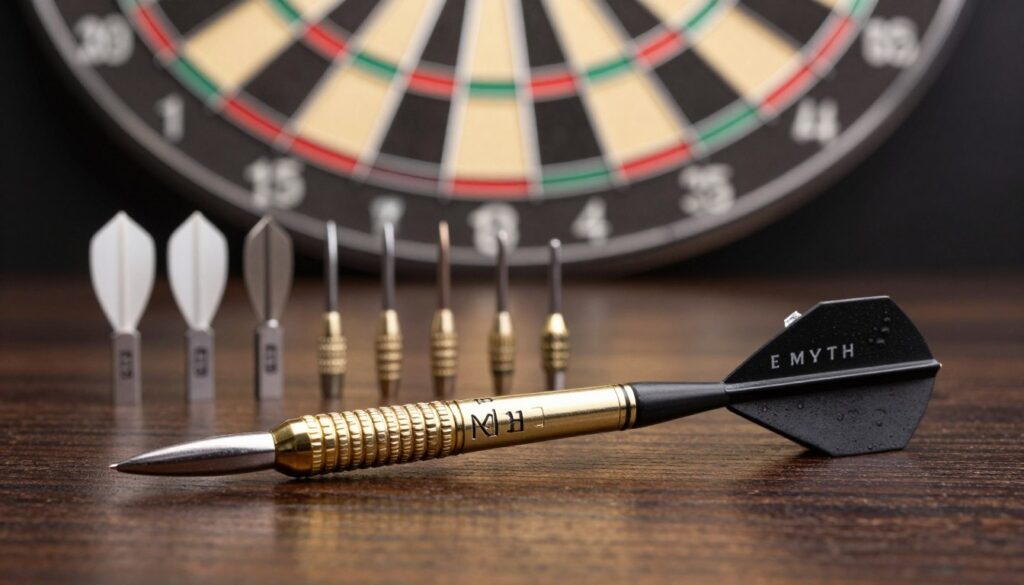
- Experiment: test different weight classes across multiple sessions.
- Observe: note how a heavier model affects momentum and release timing.
- Match components: pair each weight with your chosen steel point to keep balance consistent.
A heavier 25g option often helps players who lack a steady release by adding momentum. But lighter setups can speed follow-through and tighten grouping.
We recommend a controlled trial: change one variable at a time, track groupings, and pick the setup that feels repeatable under pressure. That is how you find the professional-level balance that keeps you scoring.
Balancing Price and Performance in Professional Gear
Investing in pro-level gear is less about brand hype and more about measurable value in practice. We ask you to treat the purchase as a long-term step in your development, not a quick fix.
Higher cost often reflects premium materials like 90% tungsten and finer machining, but excellent options exist across budgets. Set a clear budget before you shop so you focus on features that matter to your game.
Do not dismiss a low retail cost out of hand. Some entry-level pro models deliver exceptional performance for the money. Test feel, track grouping, and compare how each model improves your consistency.
- Match spend to needs: avoid paying extra for features you won’t use.
- Compare series: line-by-line comparisons reveal where you get value.
- Think long term: the best purchase accelerates skill, not just fills a case.
Ultimately, the best price is the one that lets you acquire reliable tools and keeps you progressing on the oche. We’ll help you find that balance.
Conclusion
Choose gear that matches your motion and mindset. A proper mix of tungsten, barrel grip, and weight turns practice into reliable scoring. Weigh each factor against your release and rhythm before you buy.
Whether you favor the precision of the Mark Meares model or the versatility of the Galaxy Realta, pick equipment that boosts your confidence and reduces variability. Small changes in setup produce big improvements at match speed.
Ultimately, the best signature choice gives you consistency every time you step to the oche. We hope this guide helps you make a clear, confident decision and keeps you progressing in competition and play.

